
FRP vs Steel in Corrosive Environments: What to Compare
Compare maintenance, handling, conductivity and material selection before choosing a structural profile.
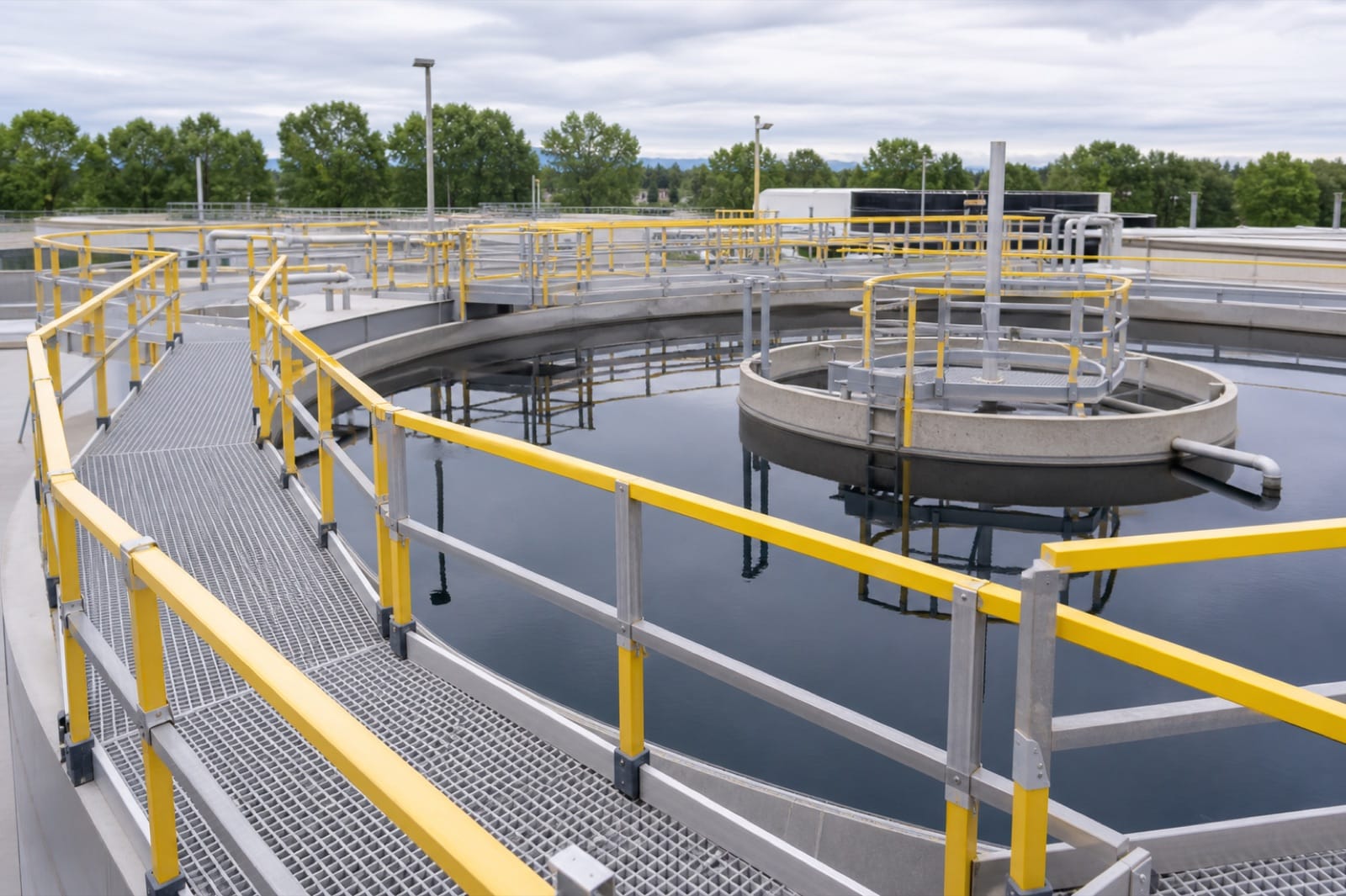
This comparison frames the inputs a project team should review before treating FRP as a replacement for a steel member.
Compare the full service condition
FRP is often considered when steel requires repeated coating, repair or replacement. Compare the operating environment, structural design, connection method, installation and maintenance plan—not only material price.
Corrosion and maintenance
A suitable FRP material system can remove routine substrate painting, but chemical compatibility still depends on the named chemical, concentration, temperature and exposure time. “Corrosion resistant” is not a universal specification.
Weight, handling and installation
Lower profile weight may reduce handling effort. The real benefit depends on member length, module size, access, site cutting, lifting method and how the connections are designed.
Electrical and structural behaviour
Fiberglass profiles can provide non-metallic options for suitable applications. FRP and steel have different stiffness, connection and failure behaviour; do not substitute dimensions directly without reviewing loads, spans, deflection and applicable design requirements.
Key takeaways
- Compare lifetime maintenance and installation—not only purchase price.
- State chemical and temperature conditions before discussing the material system.
- A same-size FRP member is not automatically equivalent to steel.
Related products and resources
Need help applying this to your FRP project?
Send the application, drawing, dimensions, environment and quantity. Haikuo will help identify the next manufacturing and quotation questions.
www.frpgdhk.com