
Factory-direct FRP pultrusion · Standard & custom profiles
Huizhou, Guangdong, China
Solutions / Custom Pultrusion
Custom cross-section development

Custom FRP Pultrusion from Your Drawing

Develop fiberglass pultruded profiles by drawing, sample, dimensions or application requirements. We review the cross-section first, then discuss tooling, material inputs, sample validation and the repeat-order route. See the current custom and special FRP profile family for the product route.
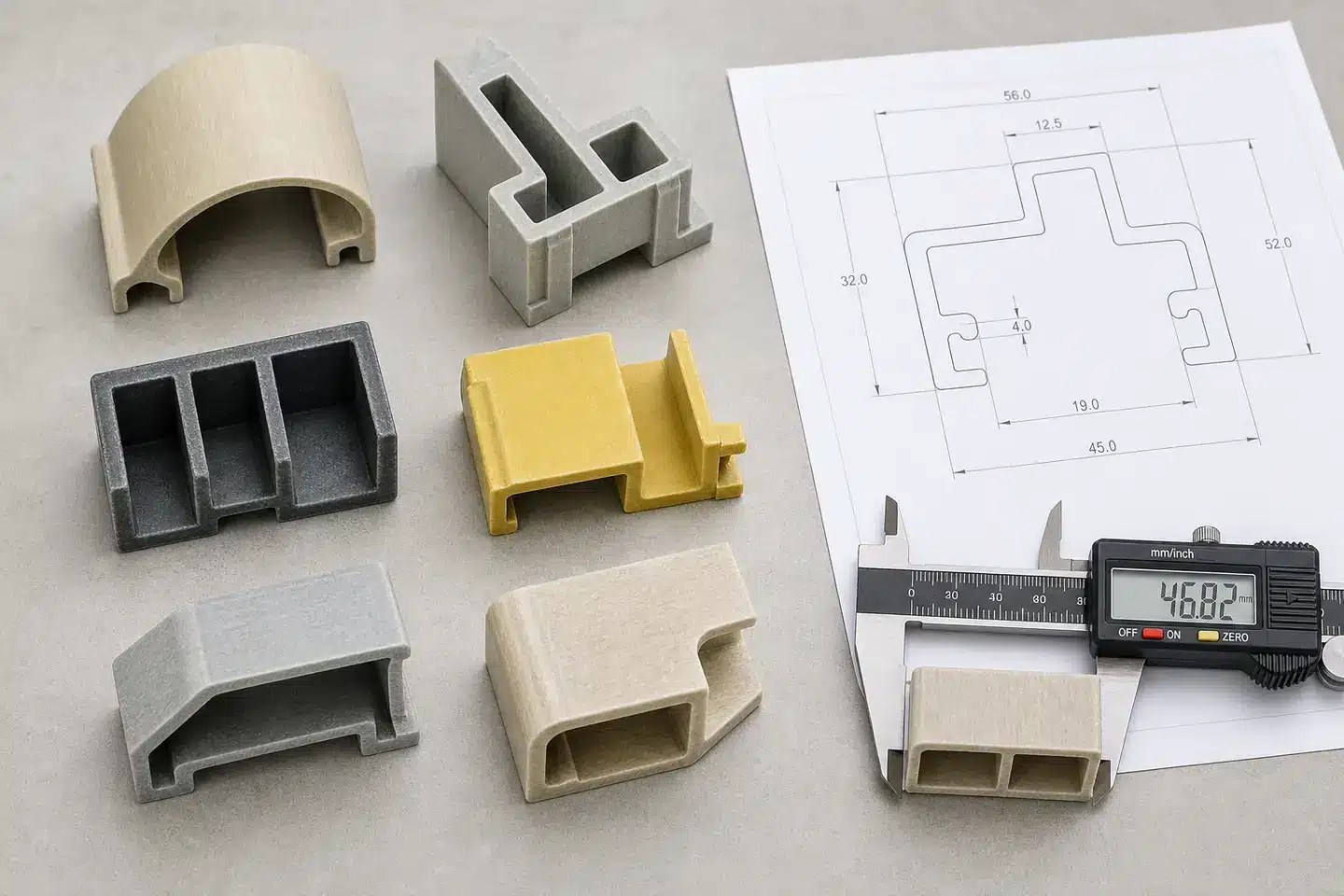
DWG / DXFPDFSketchSample photo
Representative custom FRP cross-section samples, technical drawing and dimensional measurement
Representative custom-profile review visualization
When custom pultrusion is relevant

Start with the function the cross-section must perform.

A custom profile is useful when it removes an assembly problem or creates repeatable geometry. It is not automatically the right answer for every low-volume part.

01Standard profiles do not fitThe mating interface, installation envelope or required function needs a dedicated cross-section.
02A special cross-section is requiredRibs, channels, lips, grooves or multiple functions need to be combined into one repeatable part.
03A metal or wood part needs reviewThe goal may be lower weight, corrosion resistance or fewer assembled pieces—not a like-for-like size copy.
04A private OEM component is neededThe part requires controlled geometry, surface, colour, cut length and reorder identification.
05Repeat supply mattersThe drawing, approved sample and inspection points need to remain clear across later orders.
Four customization variables

The section, material and supply detail must be reviewed together.

Changing the resin, reinforcement or wall distribution can affect feasibility, cost and validation. The drawing is the beginning of the technical brief—not the complete brief.

Representative custom FRP cross-section samples, technical drawing and dimensional measurement
Representative cross-section and dimension review
01 · ShapeCross-section geometry

Wall transitions, radii, hollows, lips and assembly interfaces are reviewed for continuous pultrusion.

Send a dimensioned section
02 · MatrixResin system

State the required corrosion, UV, temperature, flame/smoke or other project property basis.

Name exposure and standard
03 · StructureReinforcement

Continuous rovings, mats/veils and the required mechanical direction are considered with the section.

State load direction and function
04 · FinishColour, surface & length

Colour, surface condition, cut length and secondary processing are agreed as order requirements.

Mark critical acceptance points
Custom development process

Six approval gates prevent tooling and production from running ahead of the brief.

Each gate should close a specific uncertainty before the next commitment: geometry, manufacturing route, tooling, sample acceptance, supply detail and production release.

01Drawing review

Check geometry, dimensions and missing application inputs.

Feasibility
02Feedback

Identify changes, questions and the proposed manufacturing route.

Direction
03Tooling discussion

Confirm tool need, ownership terms, cost scope and timing.

Tooling
04Sample production

Produce a section for dimensional, assembly and surface review.

Validation
05Trial order

Confirm processing, packing and repeat-order checkpoints.

Commercial proof
06Mass production

Release against the approved drawing and order requirements.

Repeat supply
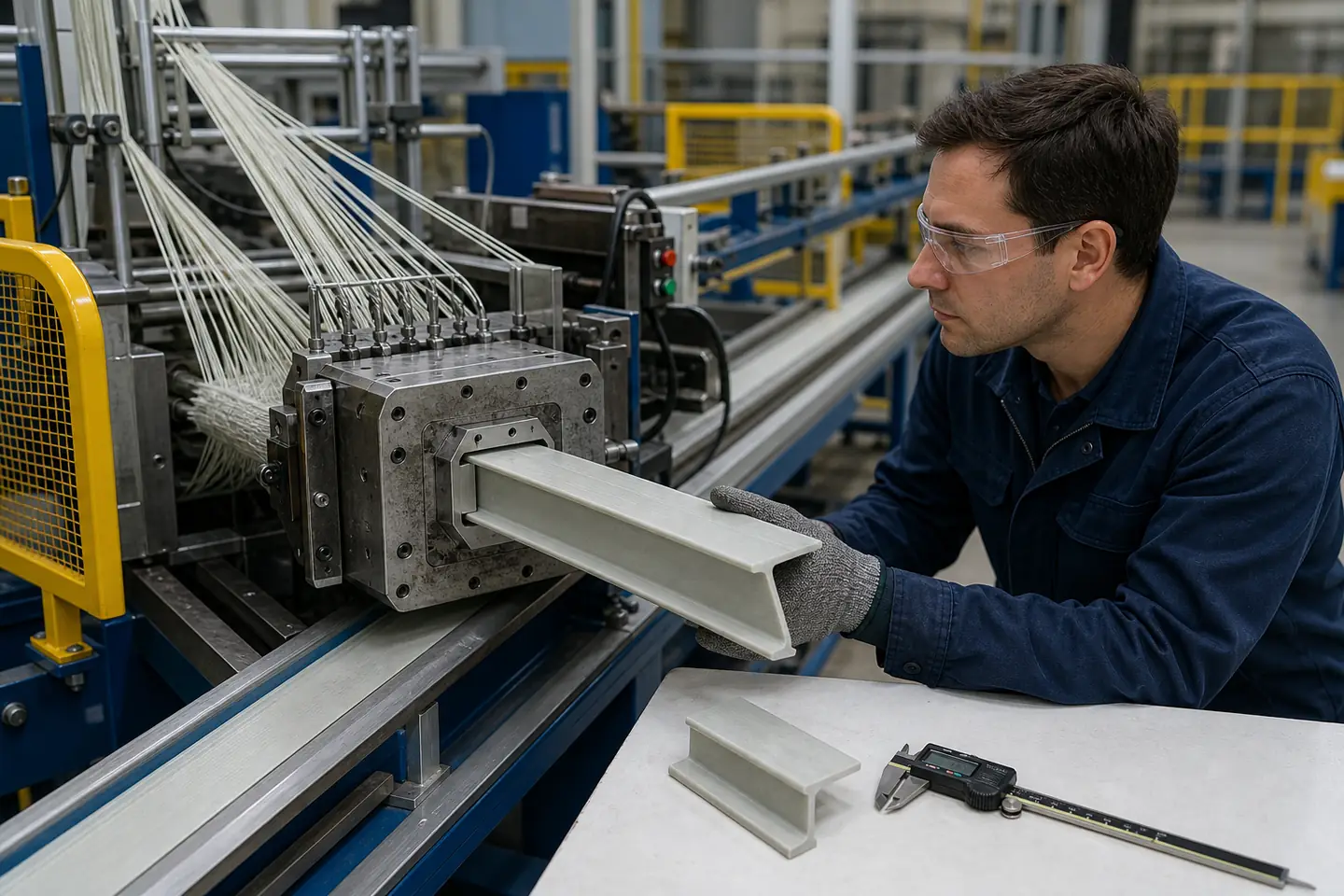
Representative engineer reviewing custom pultrusion tooling, profile output and cut sample
Representative tooling and sample-review visualization
Tooling, sample & MOQ

Make the commercial threshold visible before development starts.

New cross-sections usually need toolingTooling scope and commercial terms are confirmed only after the cross-section and material direction are reviewed.
Feasibility can be checked firstA drawing review can identify obvious geometry or wall-transition questions before a tooling commitment.
Samples validate more than appearanceUse samples to check the section, mating interface, critical dimensions, surface and processing—not the complete system design.
MOQ is project-specificMOQ depends on cross-section, material, colour, length, setup and order plan. It should be stated in the quotation, not assumed from another profile.
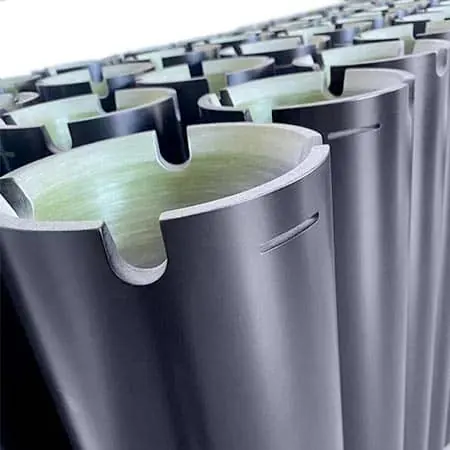
Haikuo custom pultruded FRP profile sections for repeat equipment applications
Real Haikuo product evidenceCustom pultruded sections already produced by Haikuo

This image shows real cross-section variety; it does not imply every visible geometry uses the same resin, tolerance or MOQ.

Information needed for review

Separate required dimensions from preferences.

Mark the dimensions and properties that control assembly, safety or customer acceptance. This helps the feasibility review focus on what cannot change.

Responsibility boundaryHaikuo reviews pultrusion manufacturability and the stated supply scope. Final structural design, code approval and certified engineering calculations remain with the buyer or project engineer when required.
Drawing formatDWG / DXF / PDF / marked sketch; include section and revision when available.
DimensionsWall thickness, radii, length, tolerance and the dimensions that control assembly.
ApplicationWhere the part is used, what it contacts, and what function or failure it must address.
QuantitySample quantity, trial order, expected first order and annual/repeat demand.
Material needsCorrosion, UV, temperature, insulation, colour, surface and stated project standards.
Processing & packingCut, drill, notch, labels, bundle length, destination and handling constraints.
Custom profile inquiry

Send the section before choosing the tooling route.

Share a drawing, sample photo, application, quantity and required properties. We will review the manufacturing questions and explain the next development step.