Start with the application route and exposure zone, then connect the walking surface, supporting profiles, hold-downs and fabrication package. Haikuo supports standard and custom pultruded profiles without treating every saltwater environment as the same design case.
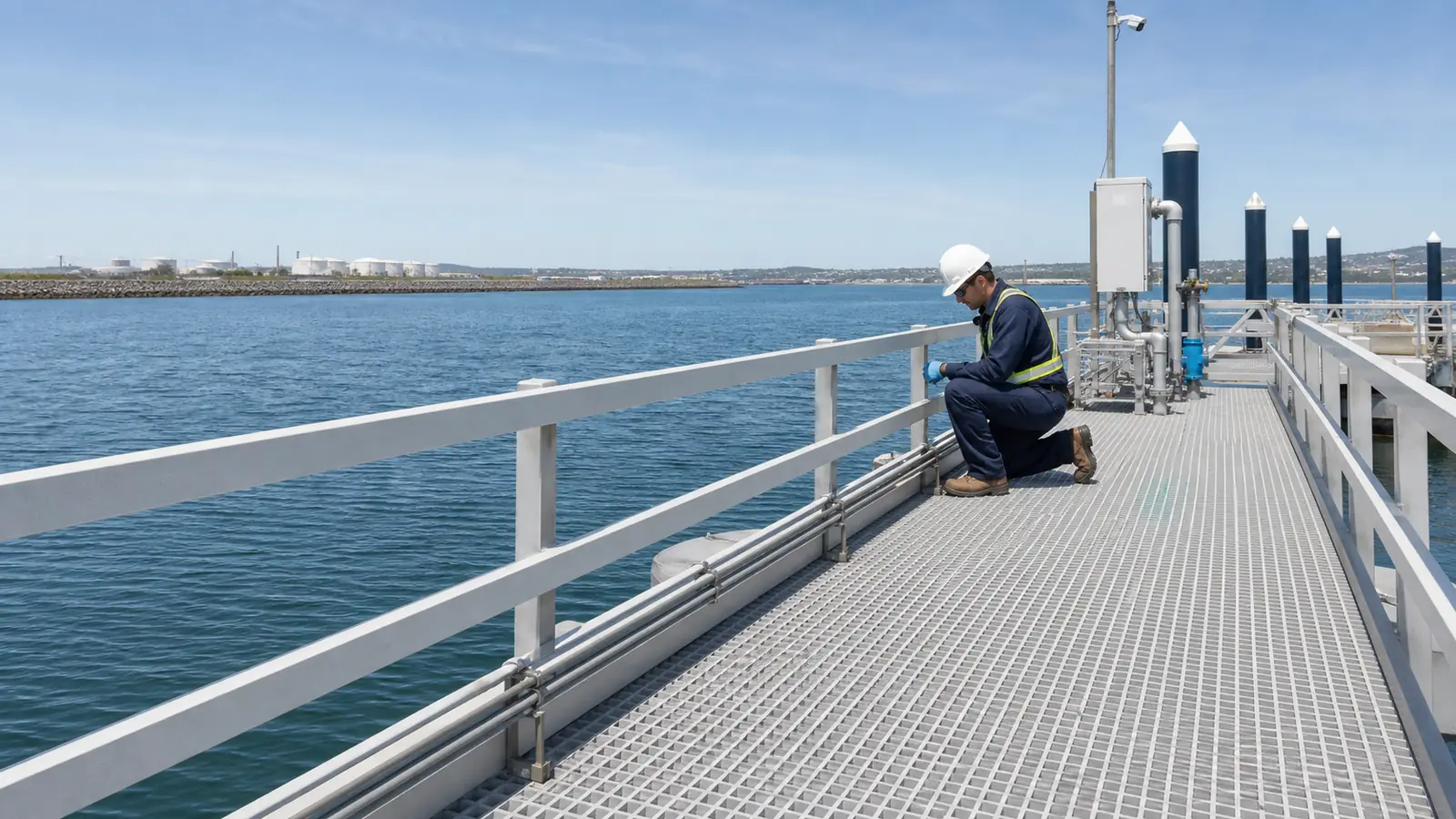
The material decision is not only “will it rust?”. A useful marine review connects exposure, walking conditions, structural supports, hold-downs, drainage and the maintenance route.
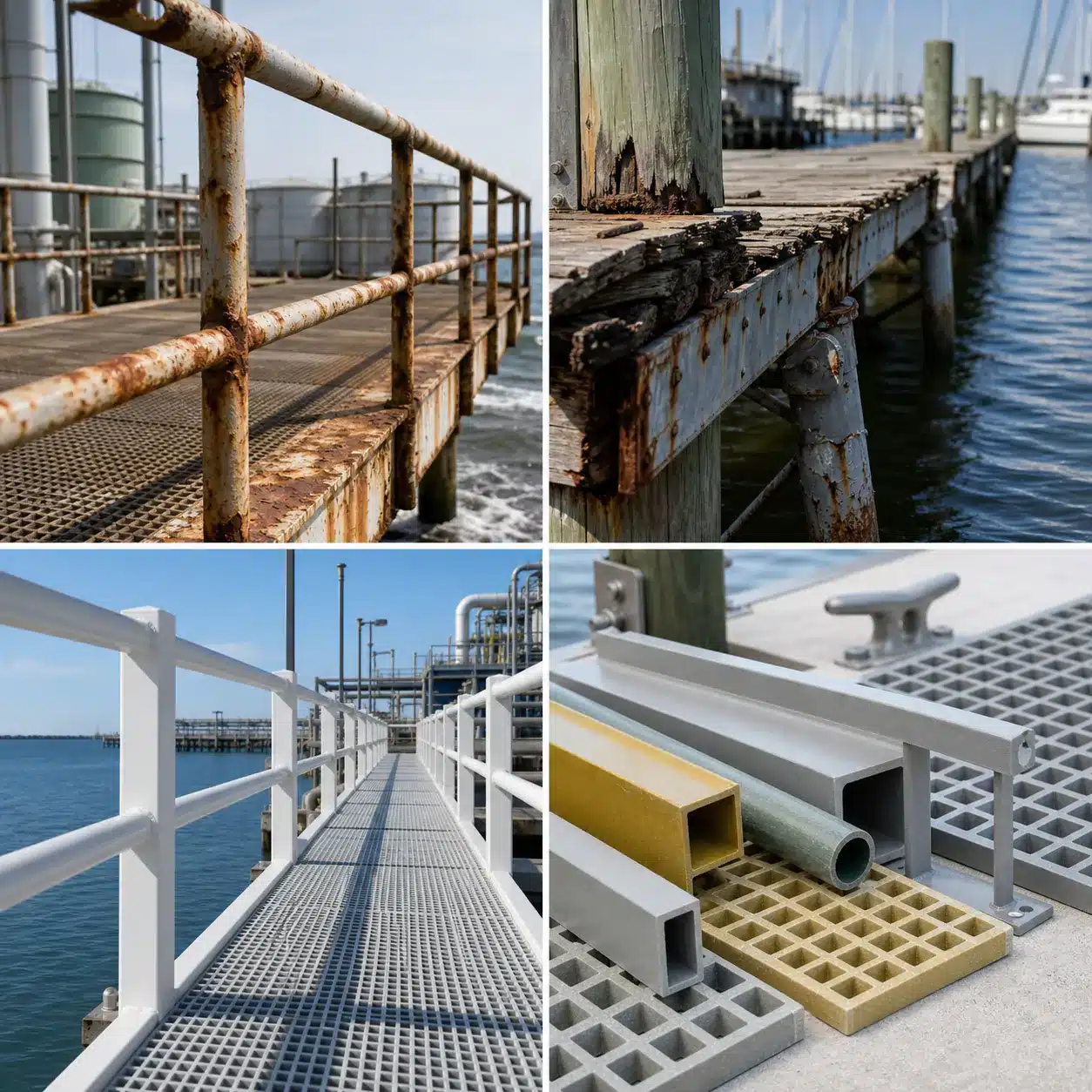
Wind carries chloride exposure to rails, frames and equipment zones that may look “dry”.
Ramps, lower supports and dock edges can move repeatedly between wet and drying conditions.
Water, algae, oil, fish residue or process contamination can change the walking-surface requirement.
Panel hold-downs, bearings, bolts and mixed-material interfaces may govern field performance.
Outdoor exposure, uplift/surge where relevant, carts and service work must be stated—not assumed.
A pier, aquaculture platform or coastal maintenance route can cross several exposure zones in a few metres. Mark the zone of each member so material requirements and interfaces are not hidden inside one general “marine” label.
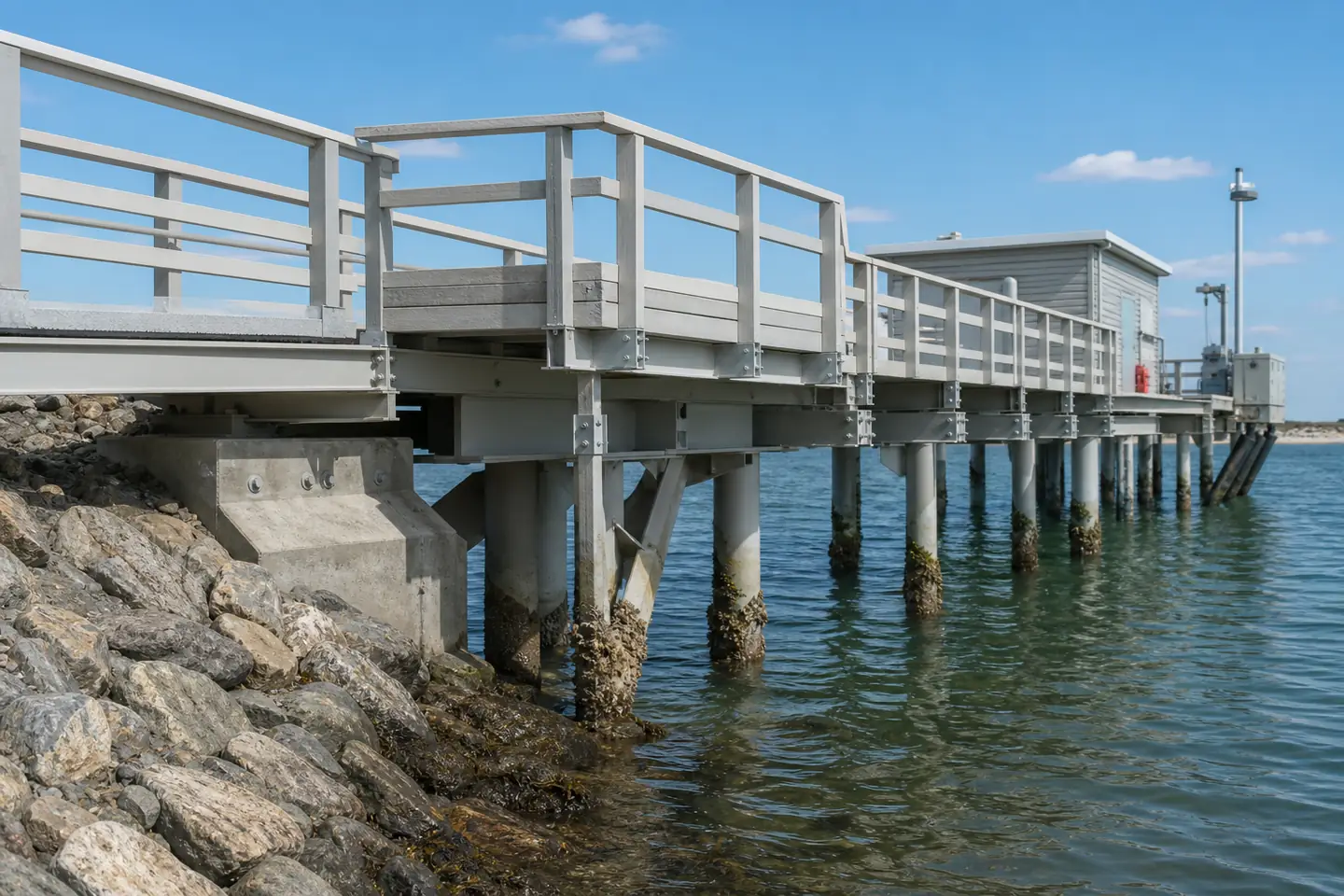
Salt-laden air, UV, rain and wind exposure around shoreline plants, terminals and perimeter access.
Confirm distance from water · UV/weather · cleaningRails, stairs, platforms and equipment supports may receive repeated spray without full immersion.
Confirm spray route · drainage · contaminationDock edges, ramps and lower supports experience changing water levels and repeated wet/dry cycles.
Confirm water levels · wave/surge input · fixingAny continuously immersed member or FRP-to-concrete/steel interface requires a specific project review.
Confirm fluid · temperature · duration · interfaceGrating and panels need a load, span, open-area, surface and hold-down brief matched to actual traffic.
Confirm user · load · surface · mesh · clipsStandard profile families can start the review quickly. Custom pultrusion is more relevant when an aquaculture system, dock program or marine equipment assembly needs repeatable geometry and a controlled interface.
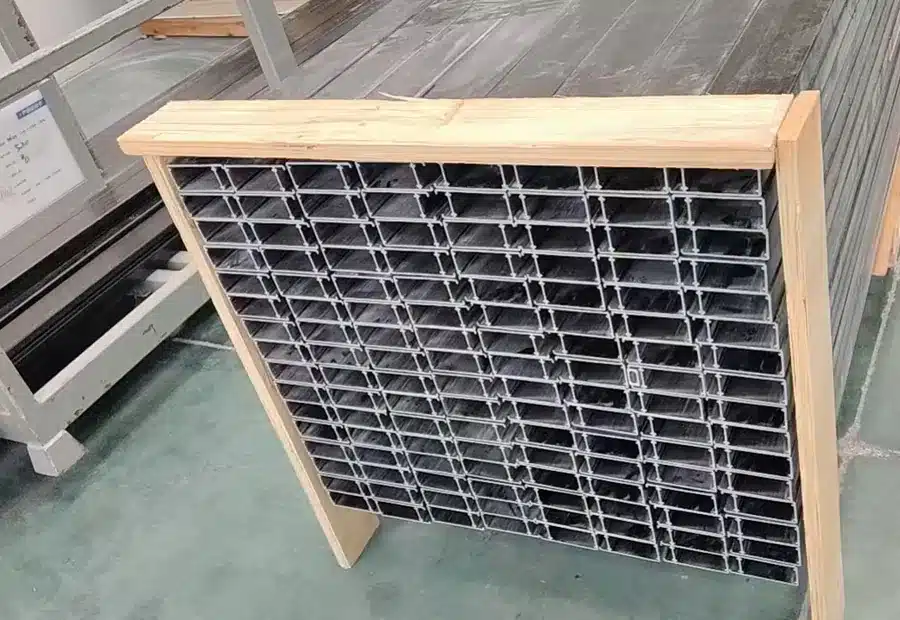
Dock decks, ramps, marina walkways, coastal platforms and removable service panels.
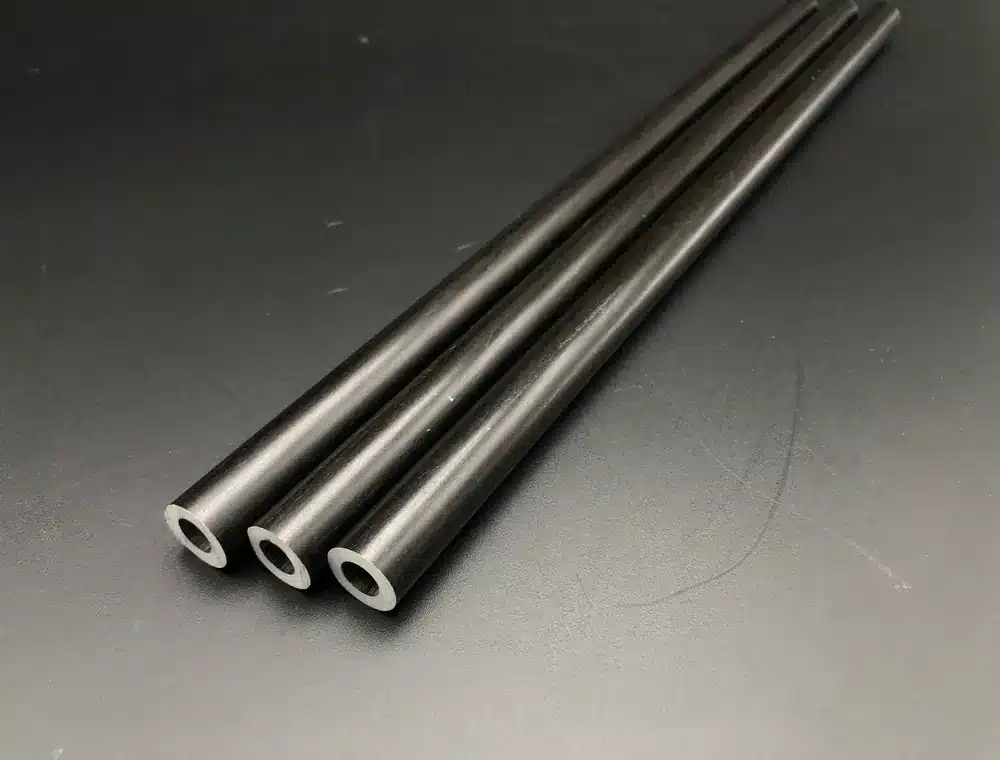
Guardrails, aquaculture frames, equipment rails, posts and repeated tubular assemblies.
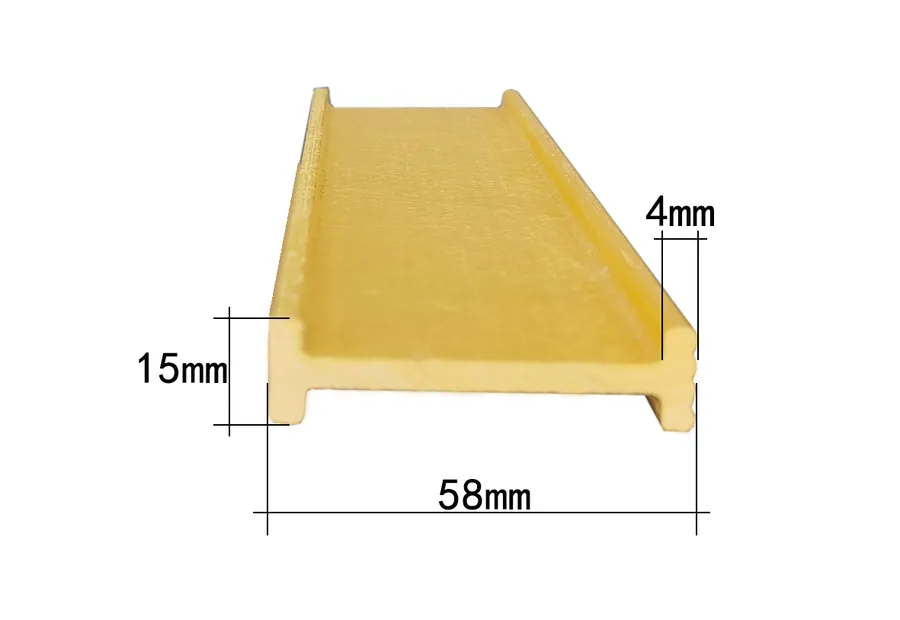
Secondary framing, deck bearers, equipment supports, edge members and replacement profiles.
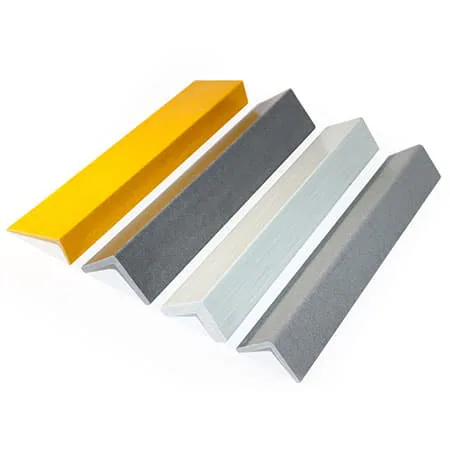
Bracing, edge support, clips, guides and repeat marine/OEM interfaces requiring controlled geometry.
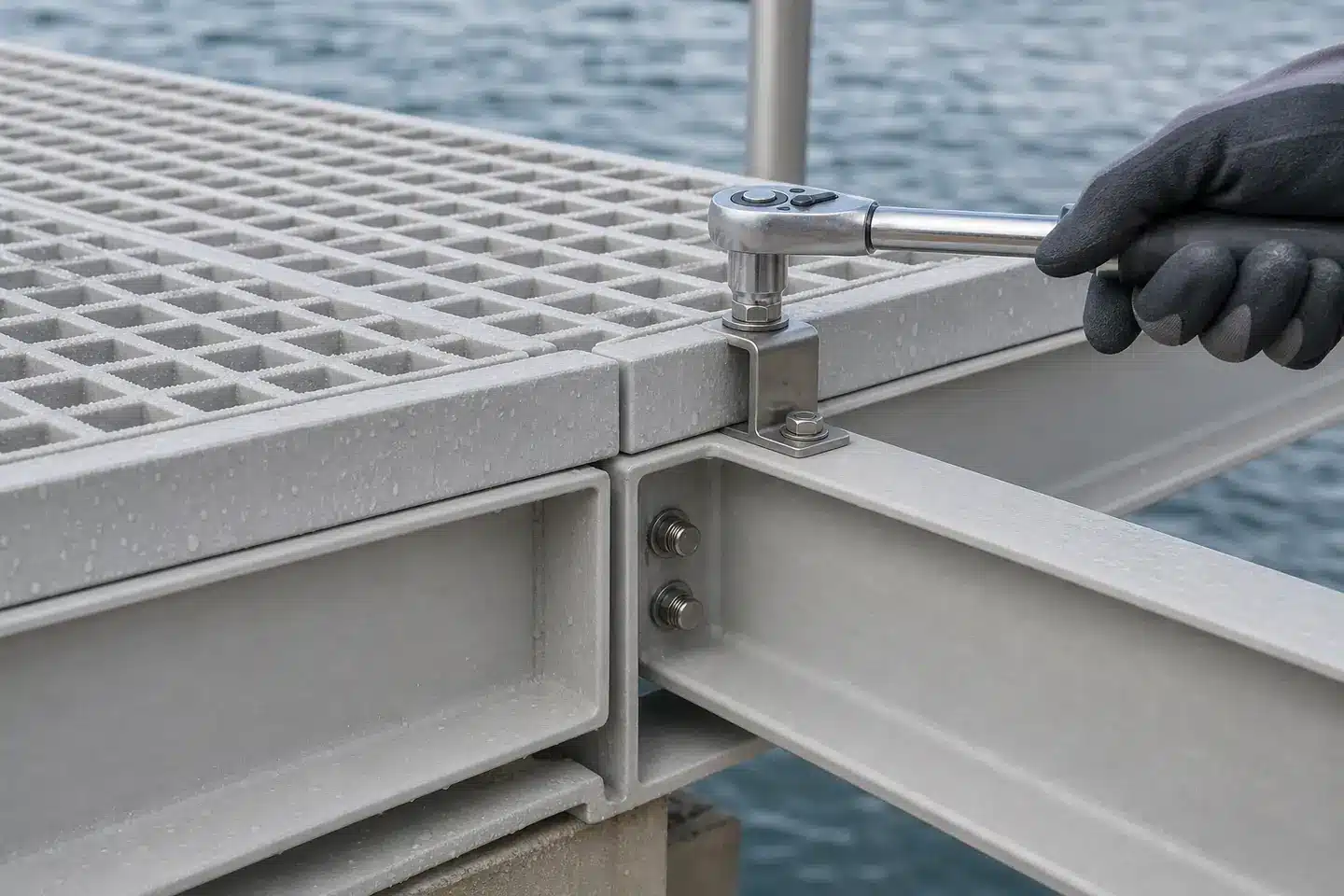
Panel selection does not confirm clip spacing, local bearing, fastener material, uplift or the surrounding structure. These inputs must come from the project design basis.
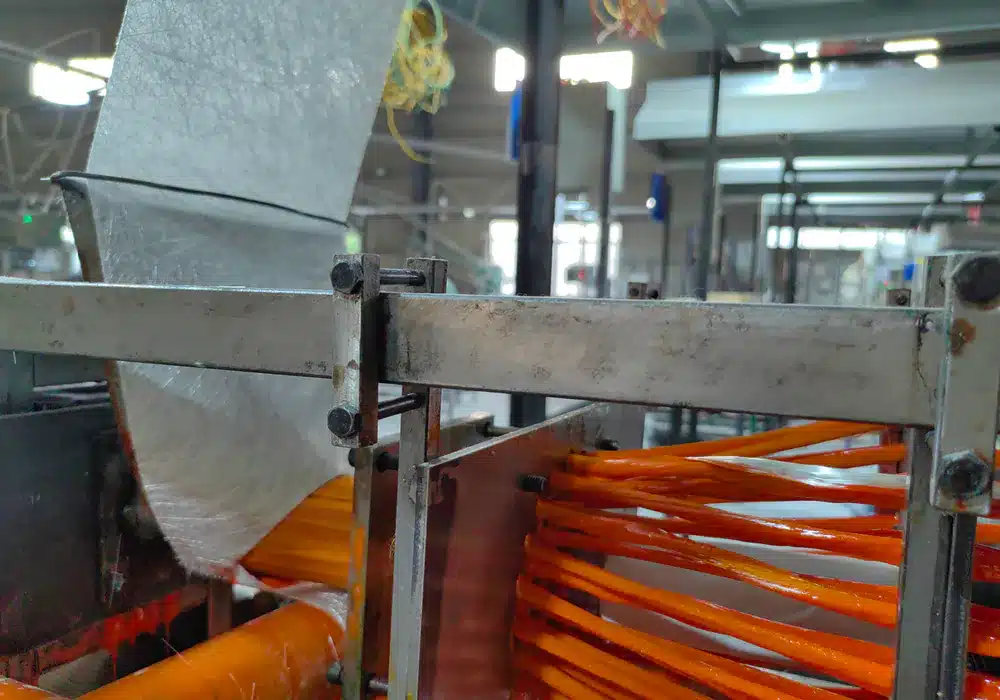
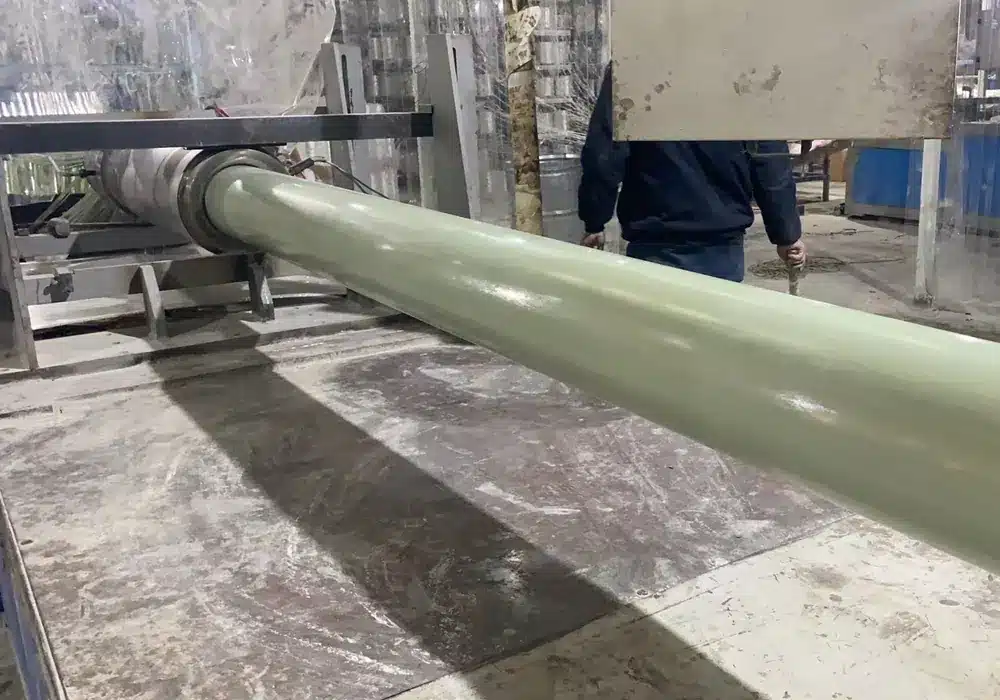
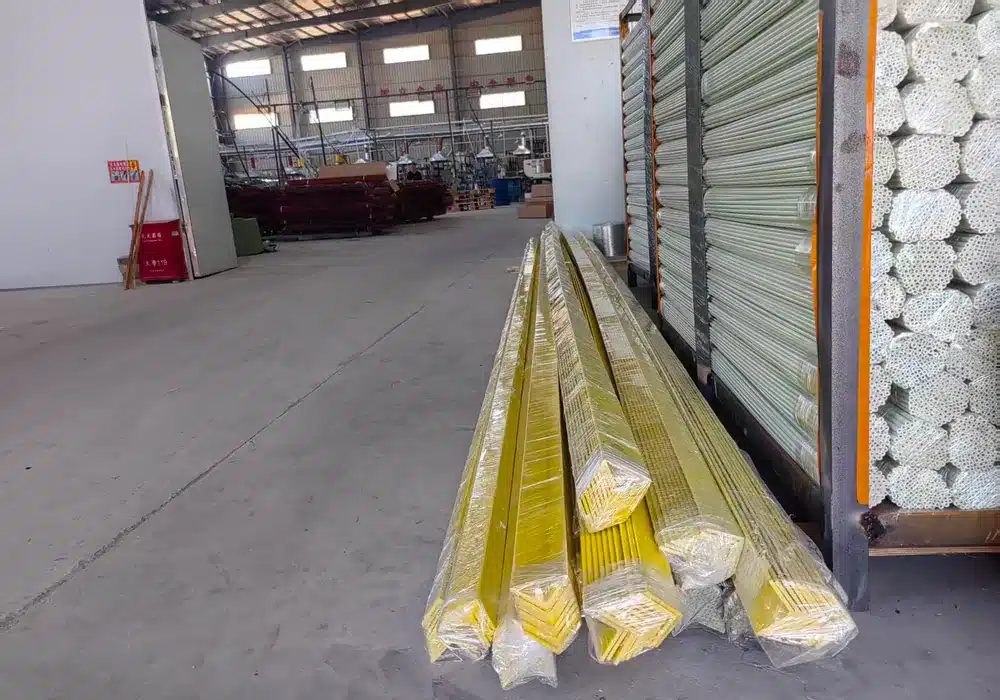
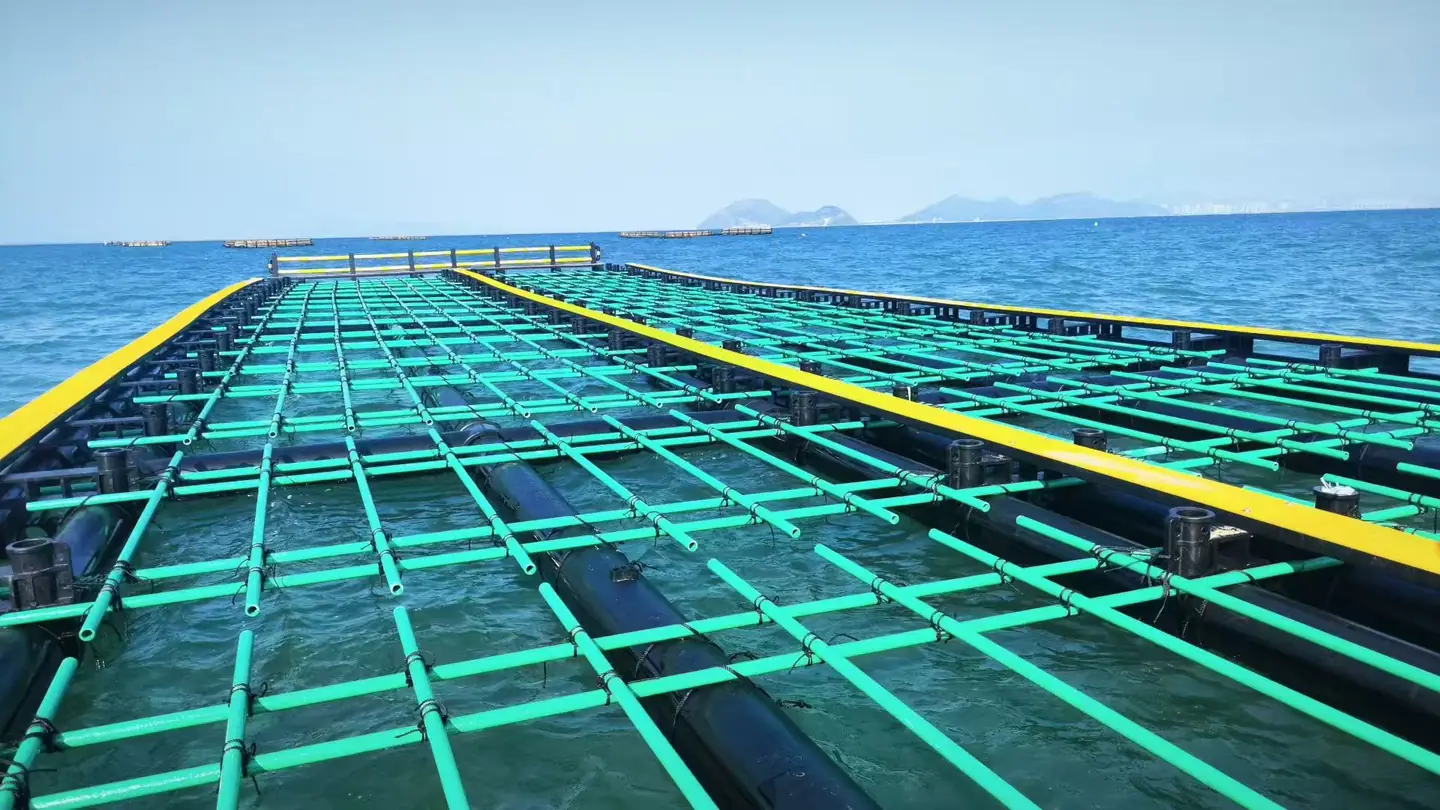
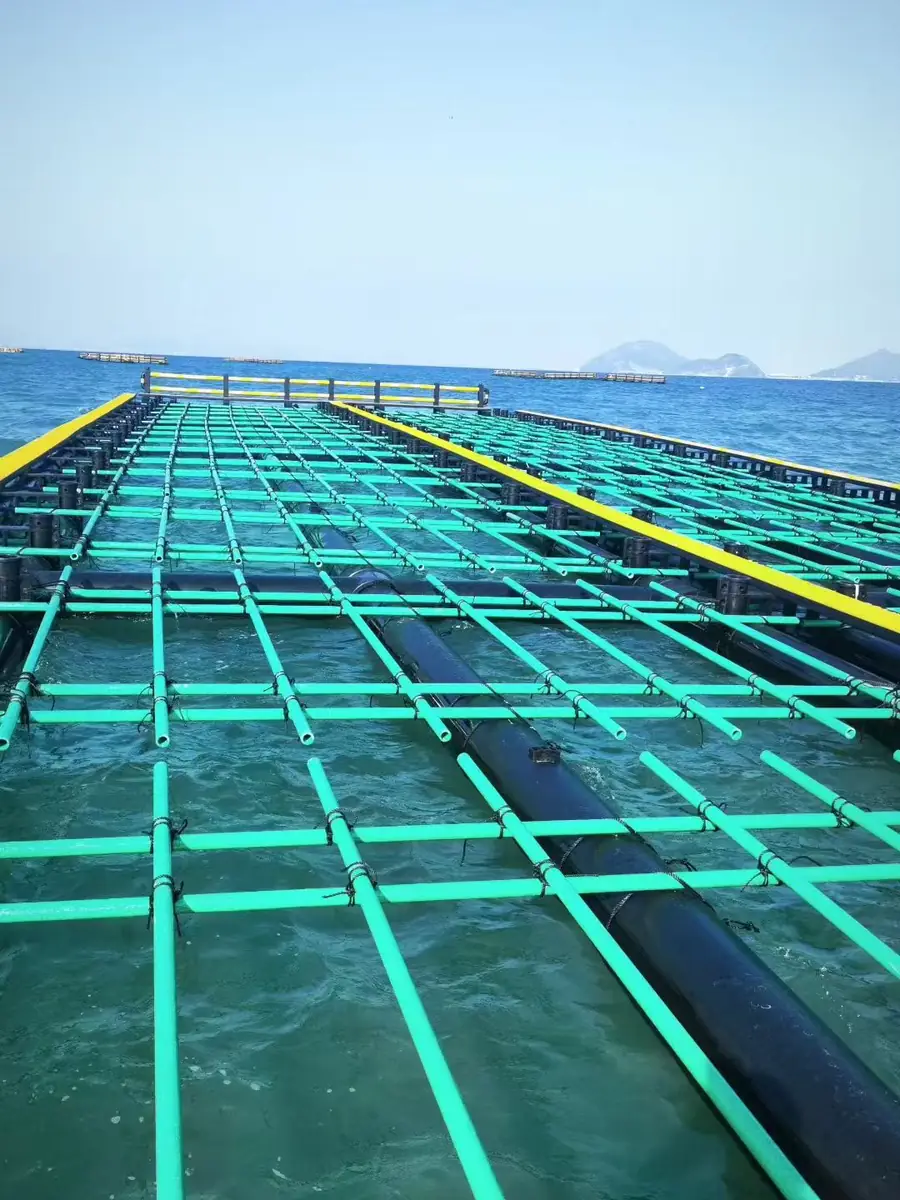
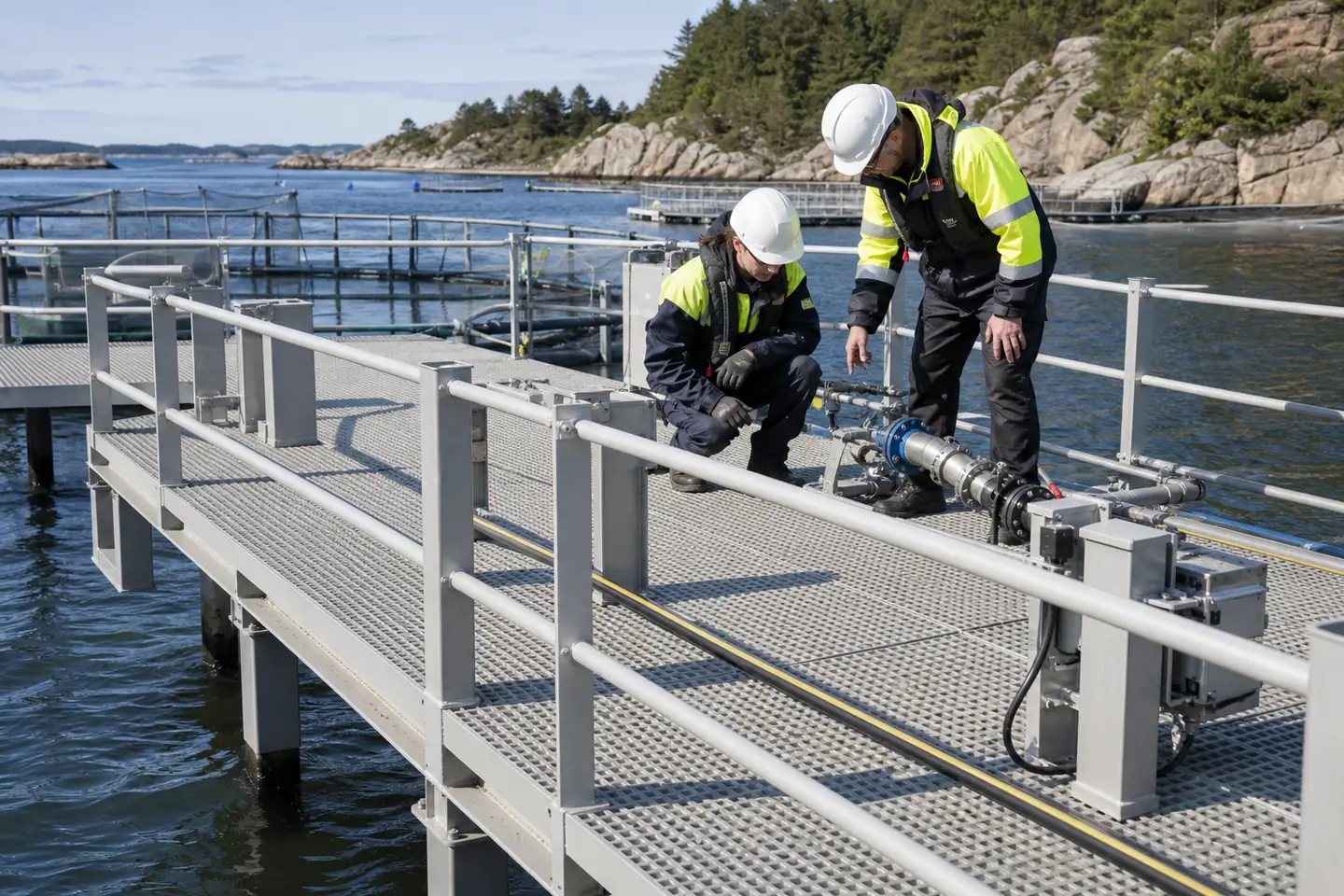
The two aquaculture photographs were supplied in Haikuo’s project-material folder and show tubular profiles in a marine platform application. The service-platform image is a representative visualization. Factory images below document Haikuo’s forming, processing and packing context.
For a quotation, identify which member is FRP, its section and wall, support/connection method, exposure zone, design inputs, processing scope and repeat quantity.