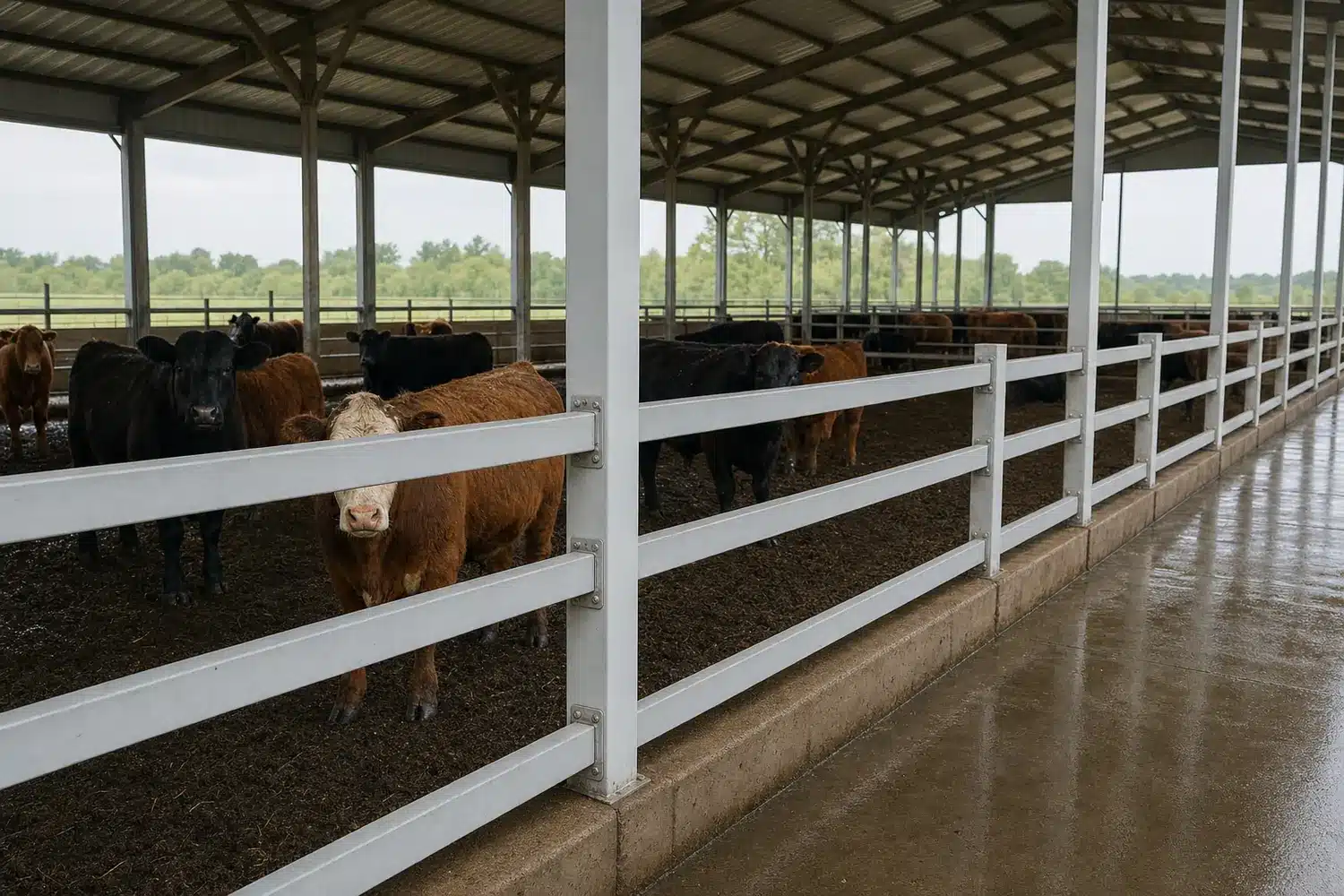
01Wet livestock buildings
Barn dividers & animal-area rails
Review rail height, openings, animal-facing edges, washdown, manure contact, floor fixing and vehicle routes.
Divider geometry · impact · cleaning exposure
Review the fence zone, loads, ground condition, animal contact and connection method before choosing posts or rails. Haikuo supplies standard and custom pultruded profiles—not a one-size-fits-all fence claim.
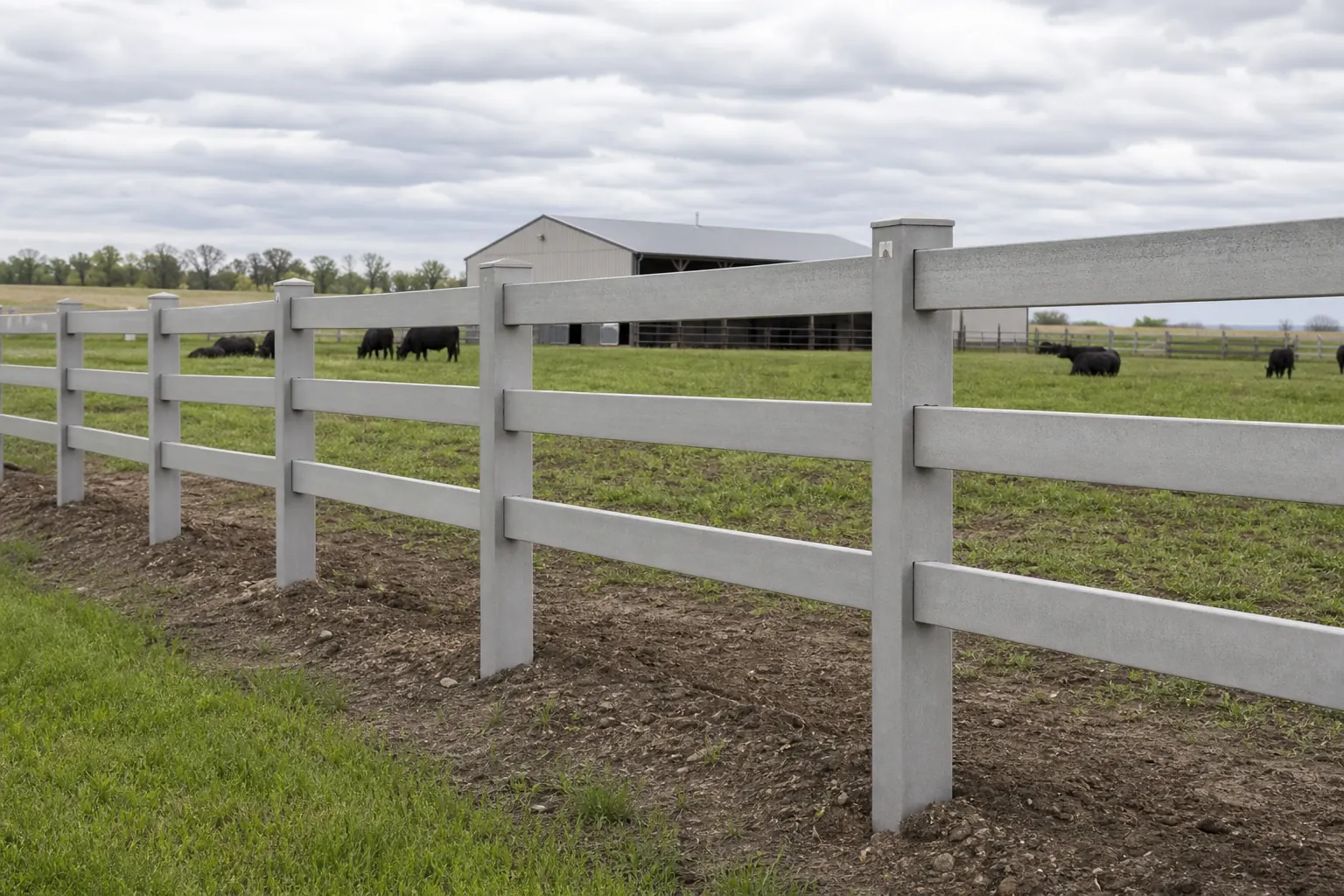
FRP does not rot or rust like wood and steel, but that does not remove system design. Profile stiffness, post spacing, embedment, hardware and animal contact still determine whether a fence or divider performs responsibly.
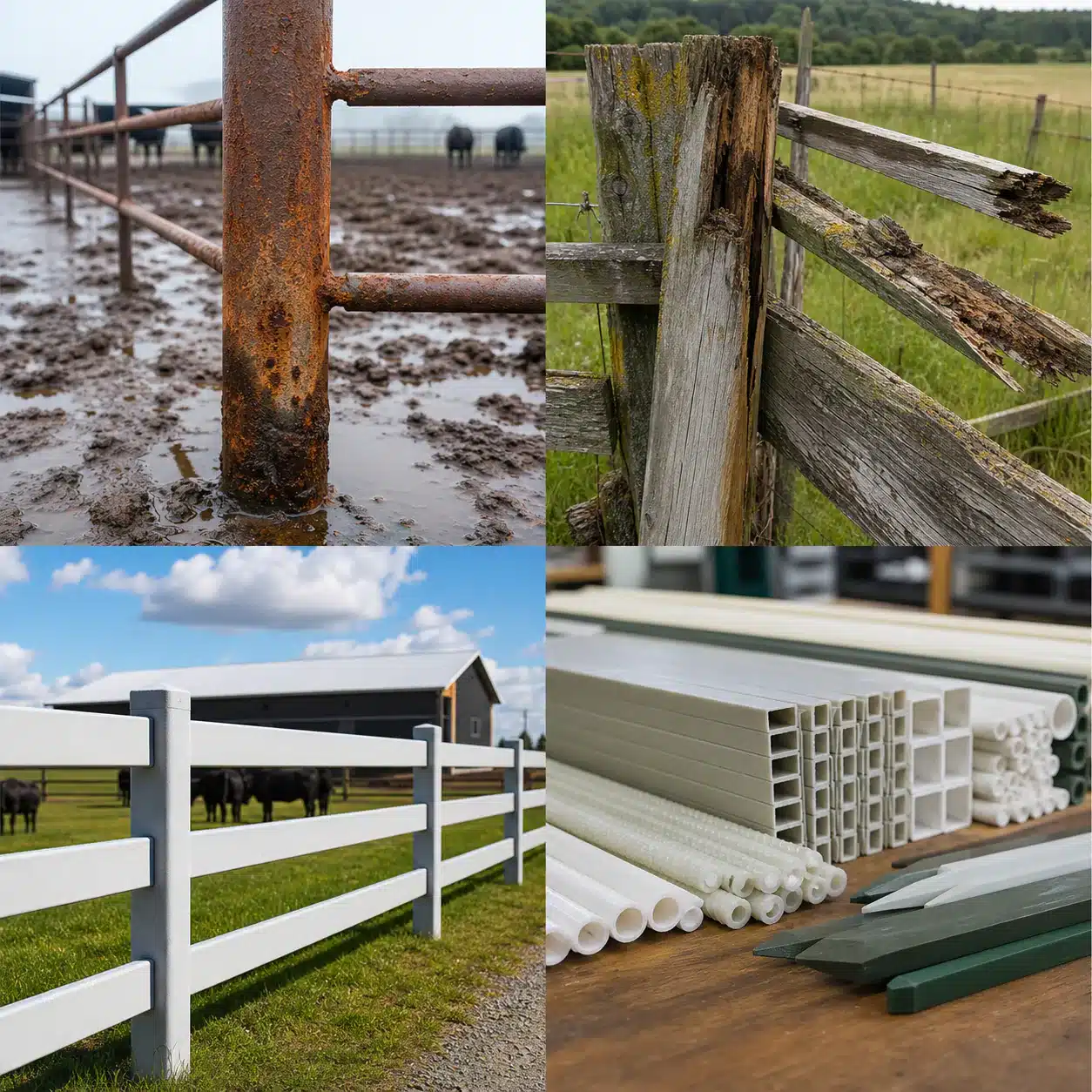
Soil moisture, fertilizer, manure and wet/dry cycling concentrate damage where posts meet the ground.
Rubbing, crowding, gates, loaders and cleaning equipment create loads that a simple material comparison misses.
Wire, mesh and rail systems transfer different forces to line, terminal and corner posts.
Drilled holes, clips, sharp edges and incompatible hardware can control service life and animal-facing safety.
Colour, surface veil, UV exposure, temperature and chemicals should be stated—not hidden behind “farm use.”
A slender electric-fence post, a cattle-pen rail and a gate support solve different problems. Treating them as the same “fence post” creates the wrong quotation inputs.
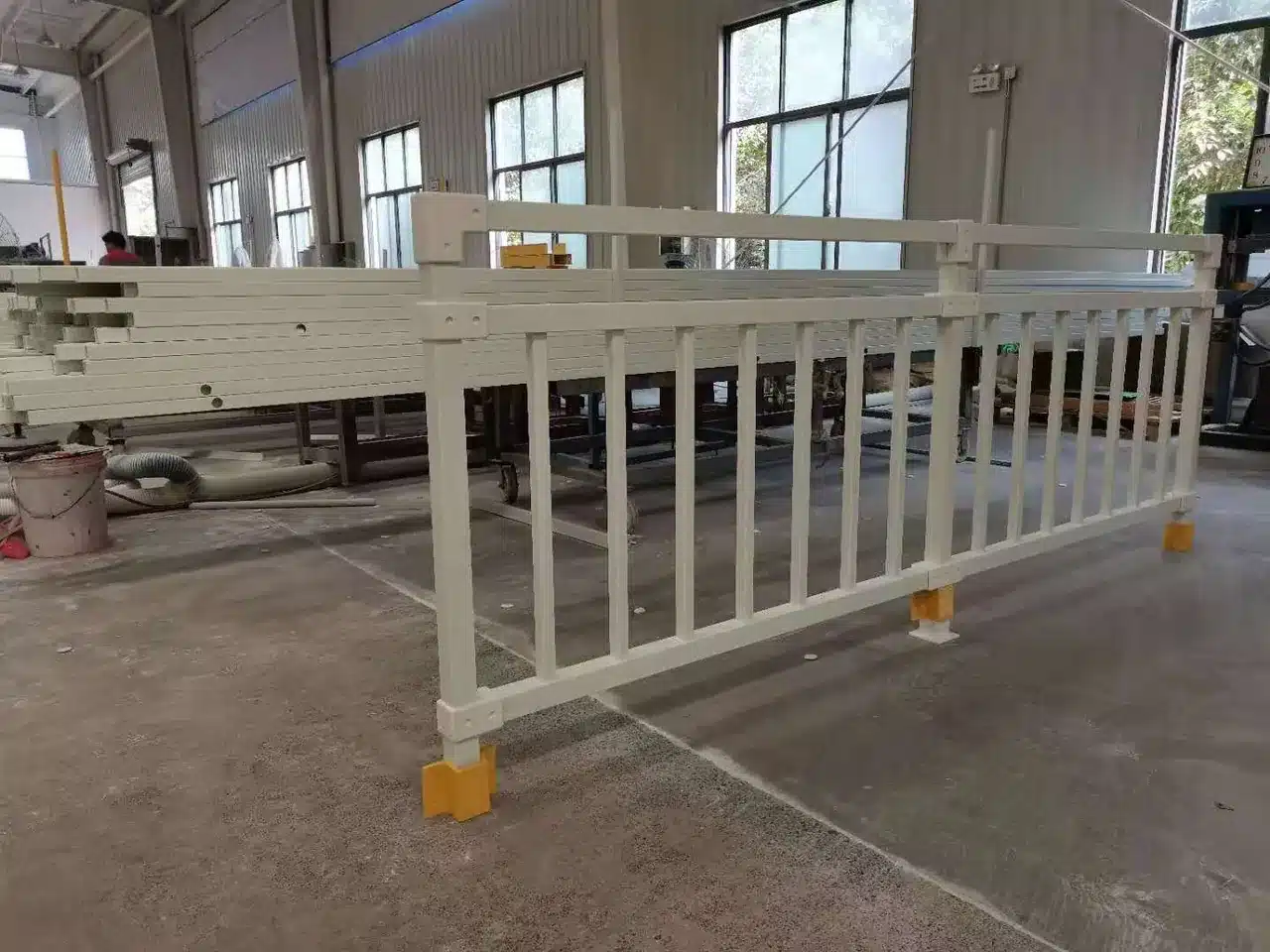
Review rail height, openings, animal-facing edges, washdown, manure contact, floor fixing and vehicle routes.
Divider geometry · impact · cleaning exposure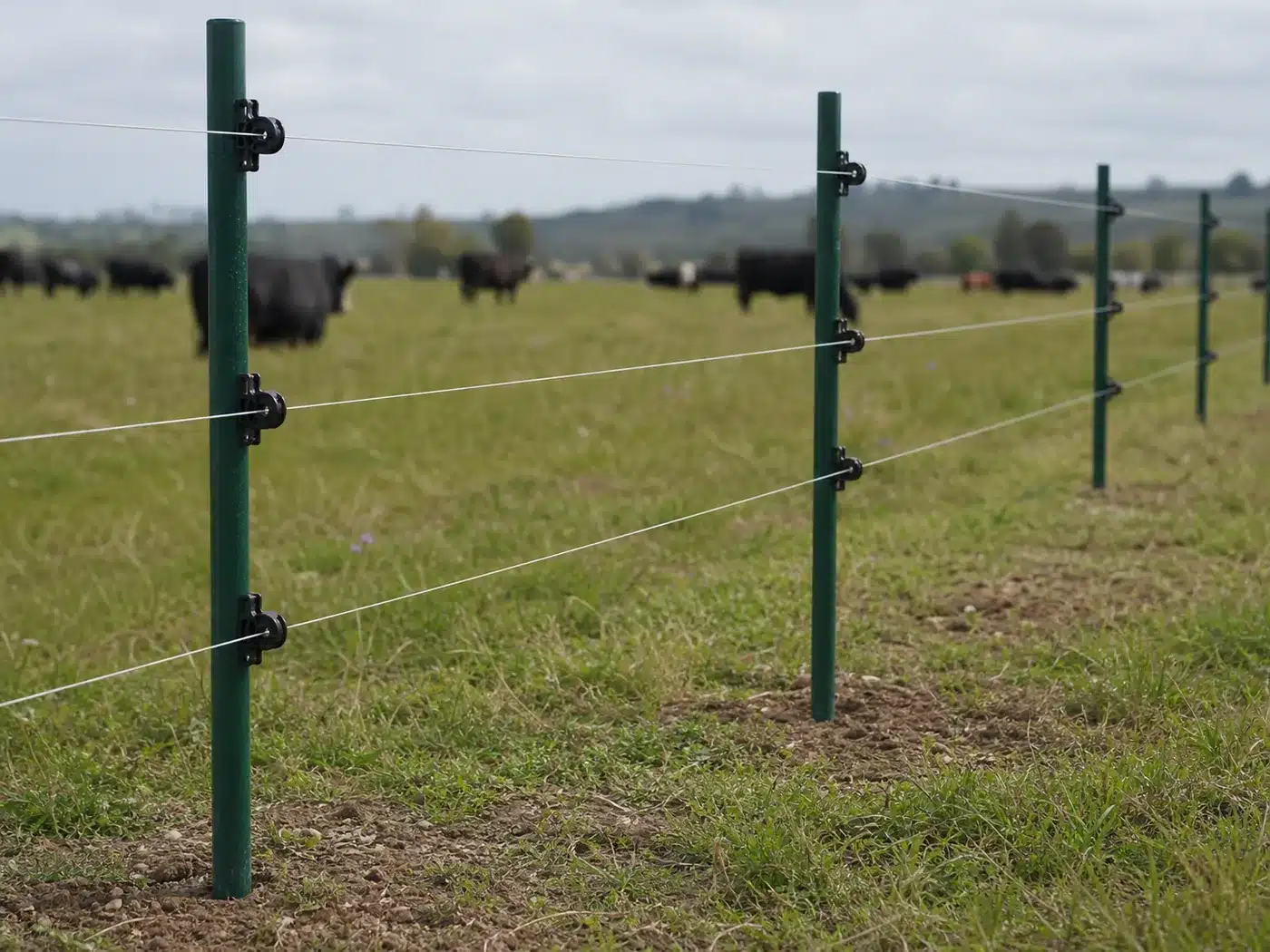
Non-metallic posts can be reviewed for electric-fence systems, but final voltage, insulators, wire spacing, energizer and local installation requirements remain a system decision.
Post flexibility · insulator · electrical validationStart with existing rods, tubes and channels where possible. Use custom pultrusion when a repeat fence, gate or divider system needs a section that integrates location, protection or assembly features.
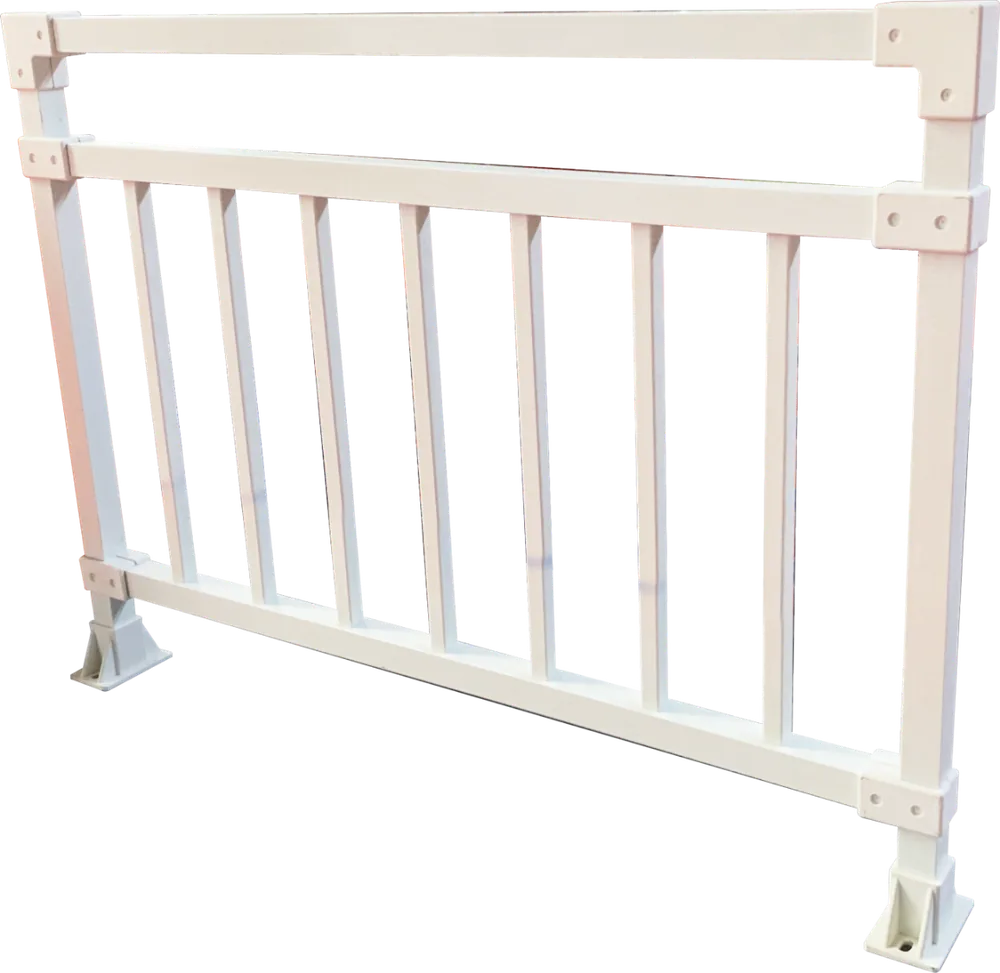
This image comes from Haikuo’s livestock product material. Final gate width, hinge/latch loads, infill spacing, mounting base and animal application still require project confirmation.
Review custom pultrusion →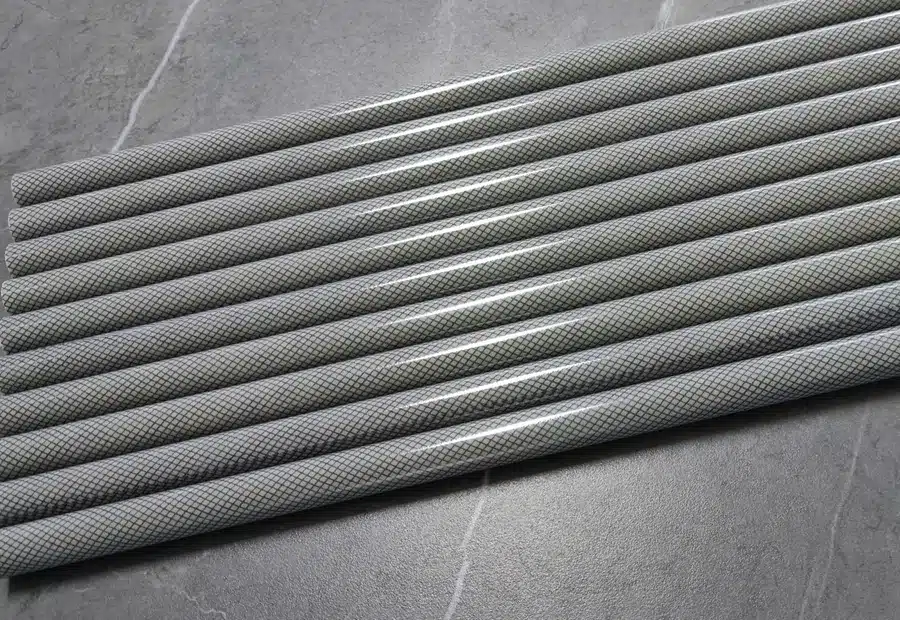
Electric-fence supports, markers, lightweight stakes and flexible post concepts.
Confirm: Diameter, length, tip/end detail, flexibility, surface, colour and required electrical properties.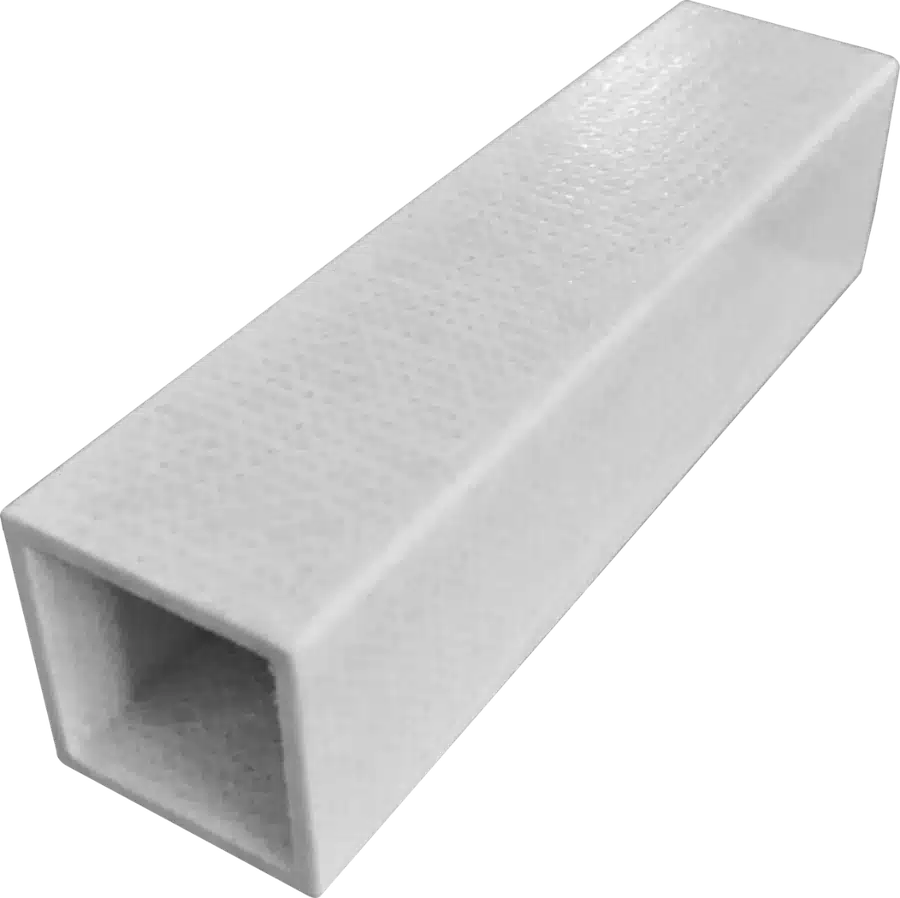
Posts, rails and modular frames where hollow sections suit the connection and load path.
Confirm: Outside size, wall, span, holes, inserts, cut length, post base and connection loads.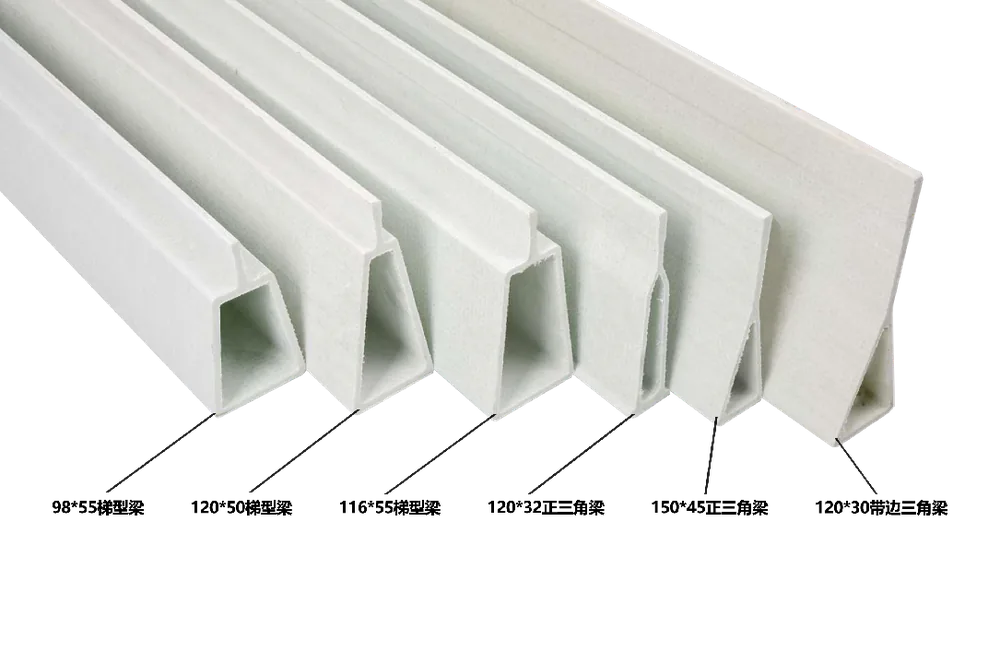
Rails, edges and divider members for repeat livestock equipment or enclosure systems.
Confirm: Section orientation, span, animal-facing edge, fastener zones, colour and surface.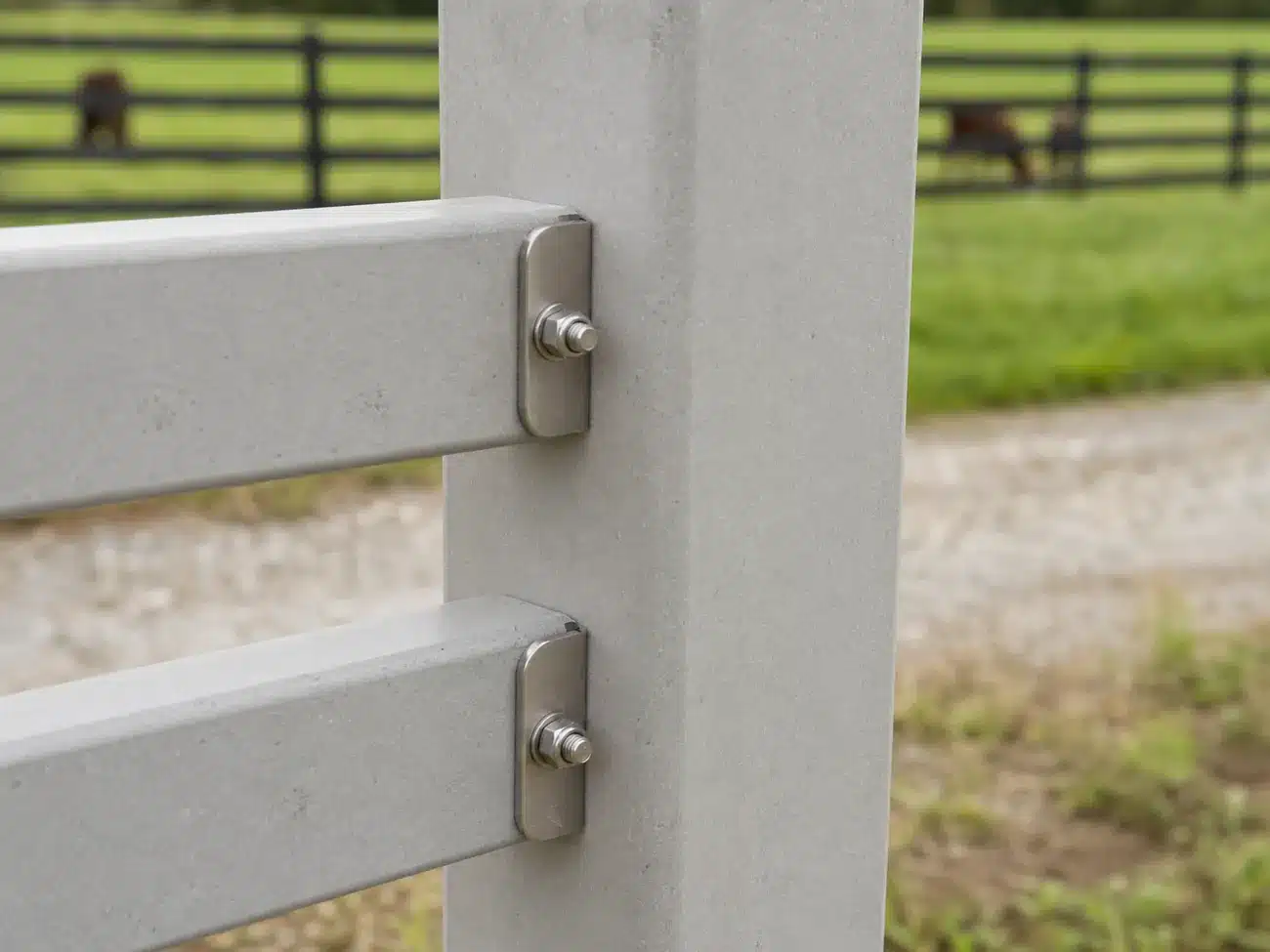
Show rail ends, hole locations, edge distances, inserts, bolts and animal-facing surfaces on the drawing. Do not quote the profile independently from its connection.
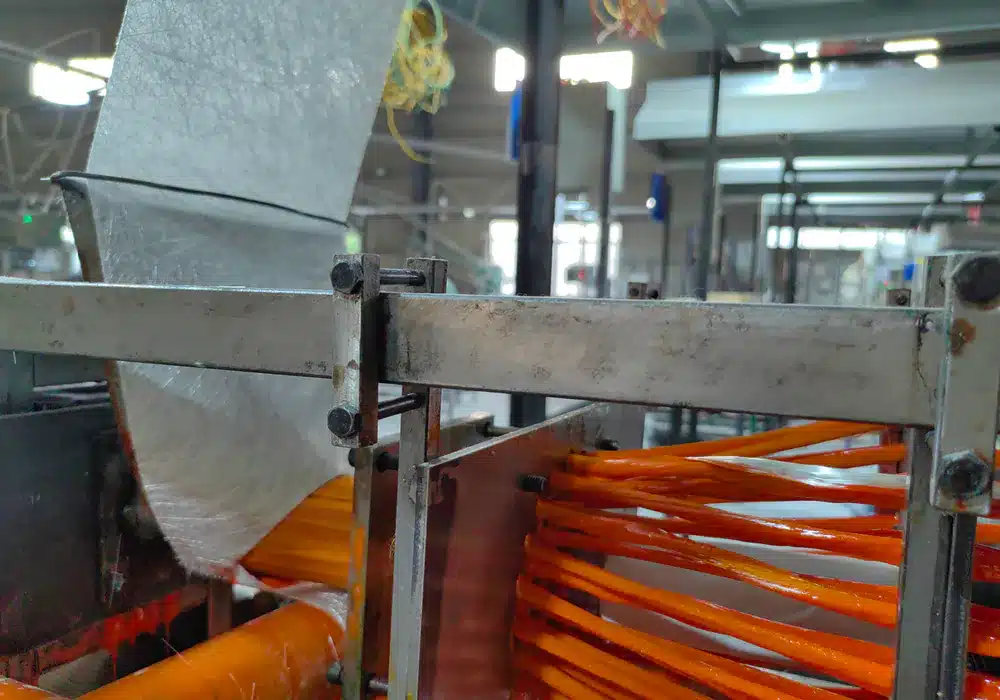
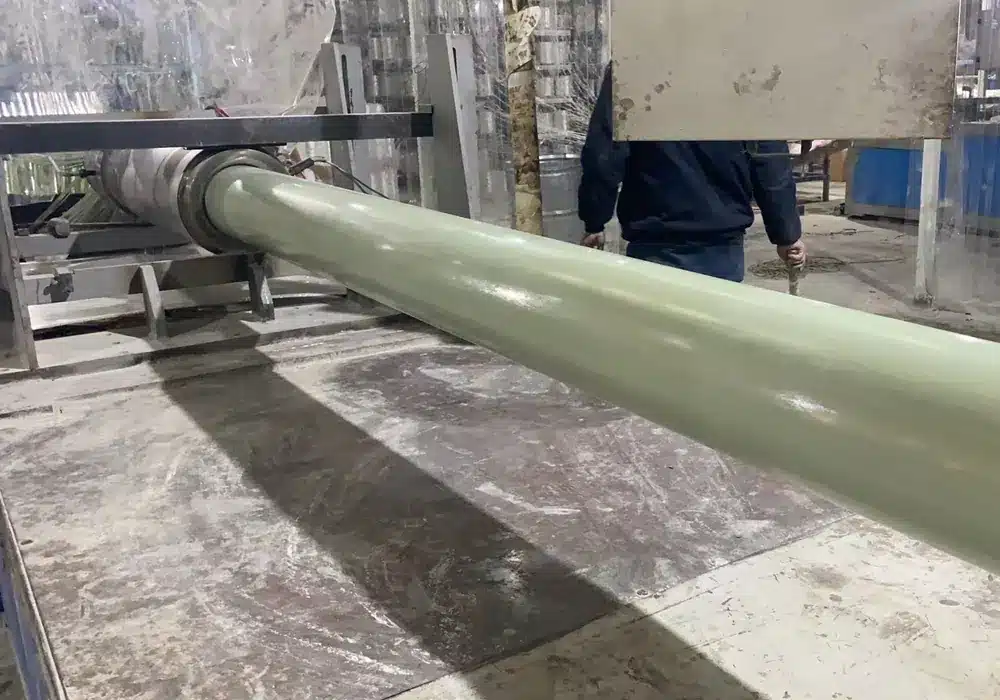
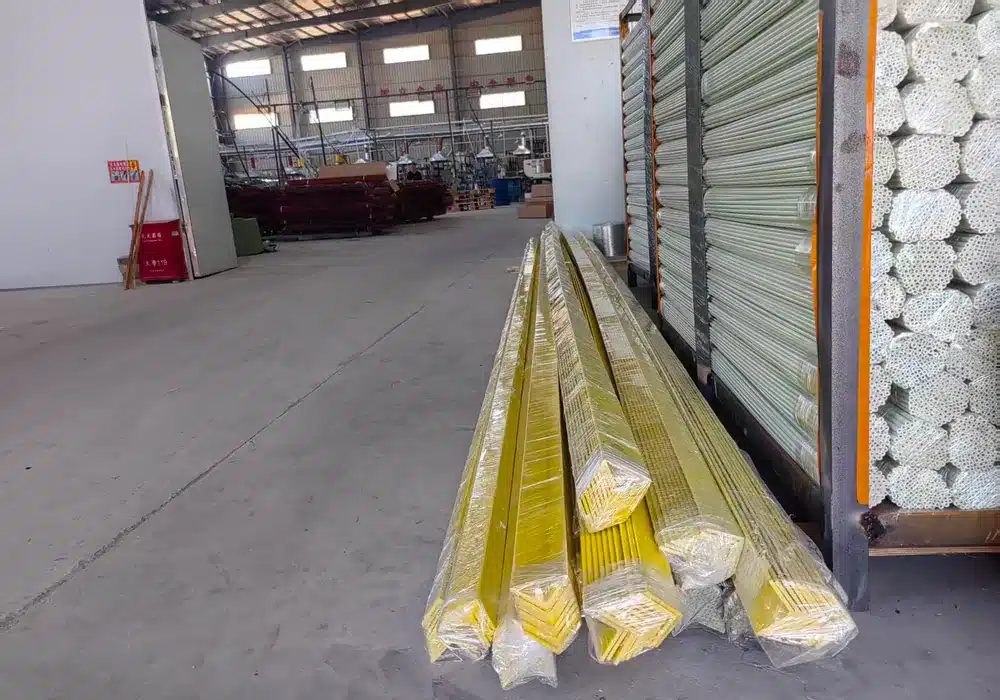
The first four application scenes on this page are representative visualizations. The images below come from Haikuo’s livestock product material and factory photo library.