Factory-direct FRP pultrusion · Standard & custom profiles
Huizhou, Guangdong, China
Industries / OEM Equipment
OEM equipment · Drawing-led supply

Custom FRP Profiles for OEM Equipment Programs

Move from a design requirement to a manufacturable constant cross-section, then define the sample, trial-order and repeat-supply controls before committing to volume.
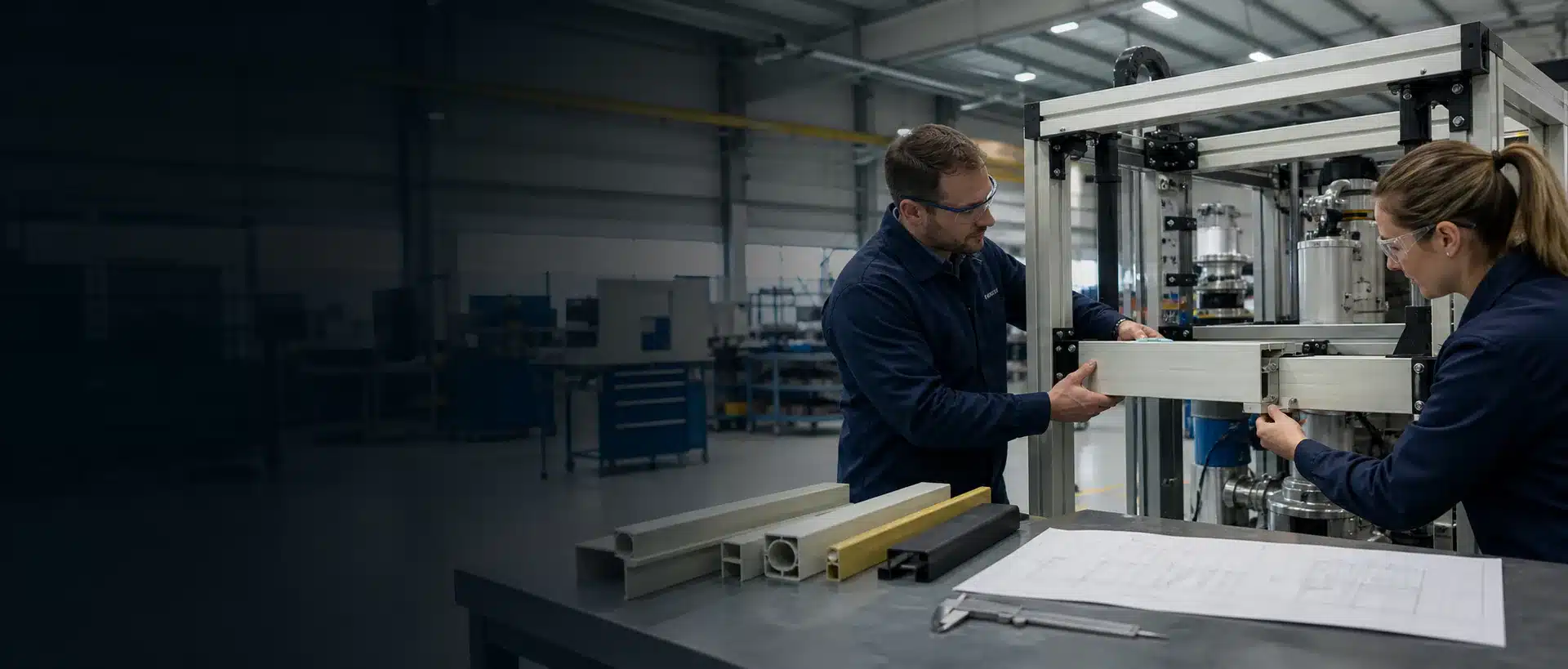
Representative OEM equipment design review using pultruded FRP profiles
Representative OEM equipment visualization
OEM project fileFrom drawing to repeat order
01
Design intentWhat the profile must do inside the equipment or assembly.
02
Geometry baselineConstant cross-section, interfaces, tolerances and cut length.
03
Validation routeSample, trial order and customer approval requirements.
04
Repeat supplyDrawing revision, inspection points, labels and packing.
OEM failure chain

Most OEM risk appears between the drawing and the repeat order.

Material choice matters, but supplier qualification usually fails at interfaces, tolerances, approval evidence and revision control. The page should make those decisions visible before price comparison.
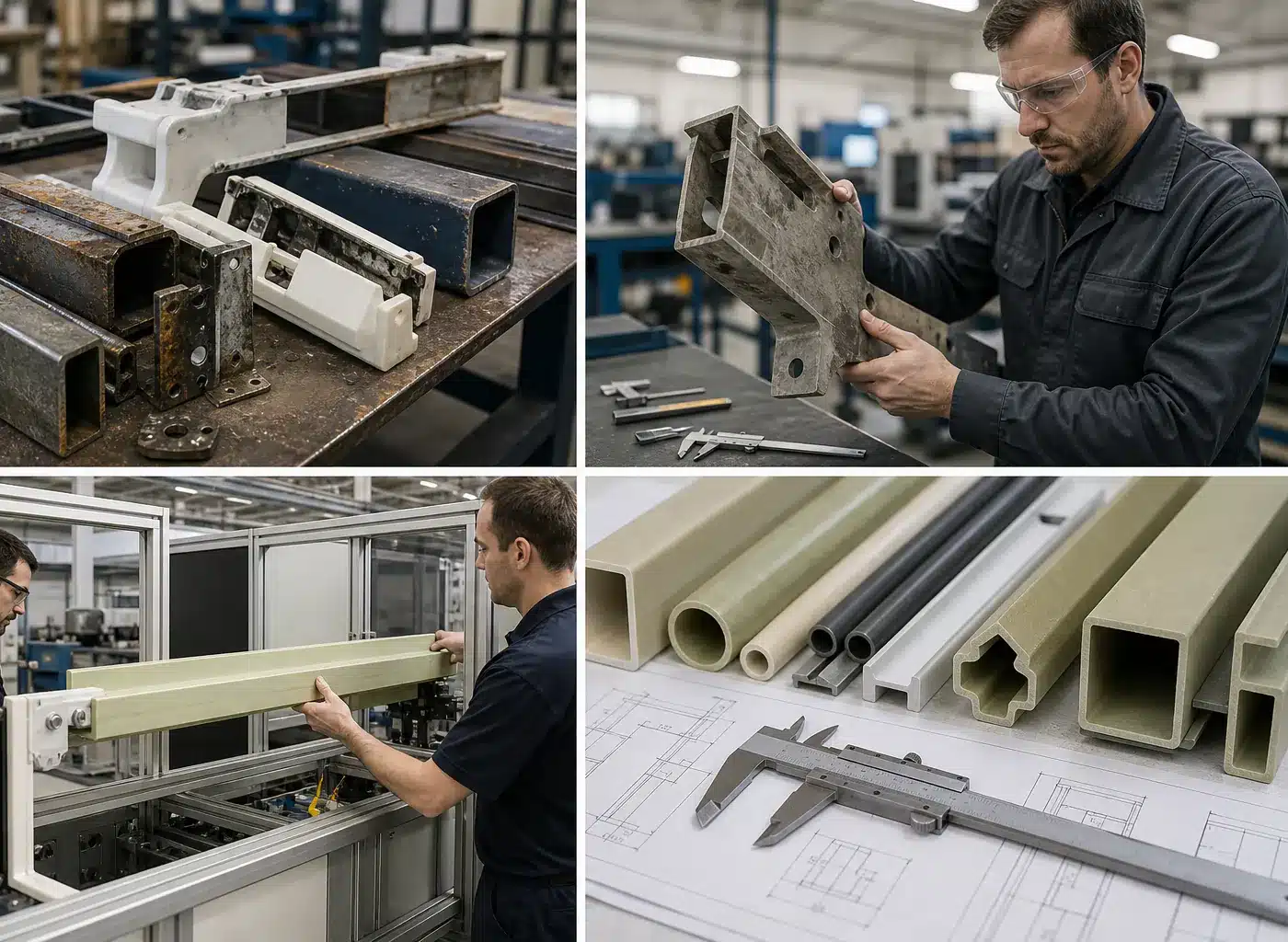
Representative OEM component mismatch, inspection and custom FRP profile development scenes
Representative problem and development visualization
01
Geometry does not fit the assembly

A profile can meet its outer dimensions and still conflict with fasteners, clearances, mating parts or processing zones.

Send the assembly interface—not only the cross-section.
02
Tolerance expectations are not measurable

“Precise” or “good appearance” is not an inspection rule. Critical dimensions, datum logic and visual acceptance need a shared baseline.

Mark critical-to-function dimensions and acceptance points.
03
The sample is approved but the revision is unclear

A drawing update after sampling can create disagreement about tooling, material, cut length and approved appearance.

Lock drawing, sample and revision status together.
04
Trial success does not automatically protect repeat orders

Colour, surface, processing, labels and packing can drift when the order documents do not define what must remain consistent.

Create a repeat-order control sheet.
Project brief

A useful OEM inquiry explains the design intent—not only the shape.

Pultrusion is a continuous process for constant cross-sections. The faster Haikuo understands the assembly, critical dimensions, performance objective and annual supply pattern, the faster the team can separate a standard-profile option from a tooling-led custom route.

OEM input sheet

A marked-up drawing, assembly image or existing sample can start the review. Final requirements should be converted into controlled order documents before tooling or production approval.

Confidential information
State confidentiality or document-handling requirements before sending sensitive proprietary drawings. Do not rely on an email subject line as the only instruction.
01Cross-section & interfaces2D/3D drawing, constant profile geometry, mating parts, holes, slots, cut-outs and assembly clearances.
02Functional dutyLoad direction, stiffness or deflection need, wear, impact, insulation, corrosion or weight objective.
03Service environmentTemperature, UV, water, named chemicals, electrical conditions, cleaning and contact pattern.
04Critical dimensionsDatums, tolerances, straightness, twist, cut length and which dimensions affect assembly or function.
05Material & appearanceResin/reinforcement requirements if specified, colour, surface, veil, visible faces and acceptance criteria.
06Program & supply planPrototype or sample need, trial quantity, forecast volume, order frequency, processing, labels and destination.
Development path

Six gates reduce risk before repeat production.

The first goal is not to rush into tooling. It is to make each approval point visible so geometry, material, sample status and commercial scope do not separate as the project moves forward.

01InputDrawing / sample briefApplication, geometry, interfaces, performance, volume and open questions.
02ReviewFeasibility checkConstant cross-section, material concept, tolerance risk, processing and tooling route.
03DefineTooling & specificationAgree the quoted scope, drawing revision, material, finish, cut length and inspection plan.
04ValidateSample reviewMeasure the sample, check assembly/function and record requested corrections.
05De-riskTrial orderConfirm repeatable production controls, processing, identification, packing and delivery details.
06RepeatSupply baselineUse the approved revision, sample status and order controls for future purchase orders.
Haikuo review boundaryManufacturing feasibility, product specification and agreed processing

Haikuo can review profile geometry, material/manufacturing requirements, tooling route, sample/trial scope, cutting or drilling, inspection inputs and export packing.

OEM approval boundaryFinal design responsibility and end-use validation

The OEM confirms functional design, design loads and safety factors, assembly interfaces, regulatory requirements, intended environment, prototype tests and final part approval.

Factory & customer proof

Real collaboration evidence should sit beside the control plan.

These are Haikuo’s own customer-review and factory images. They show the practical points where requirements move from discussion to profile inspection, production and processing.
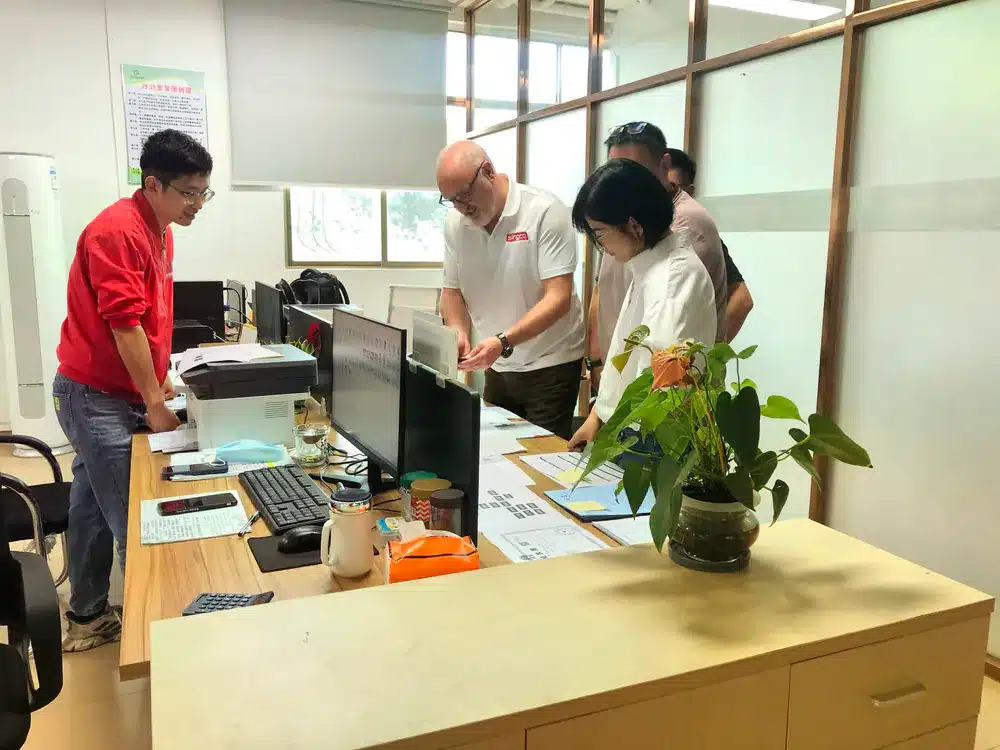
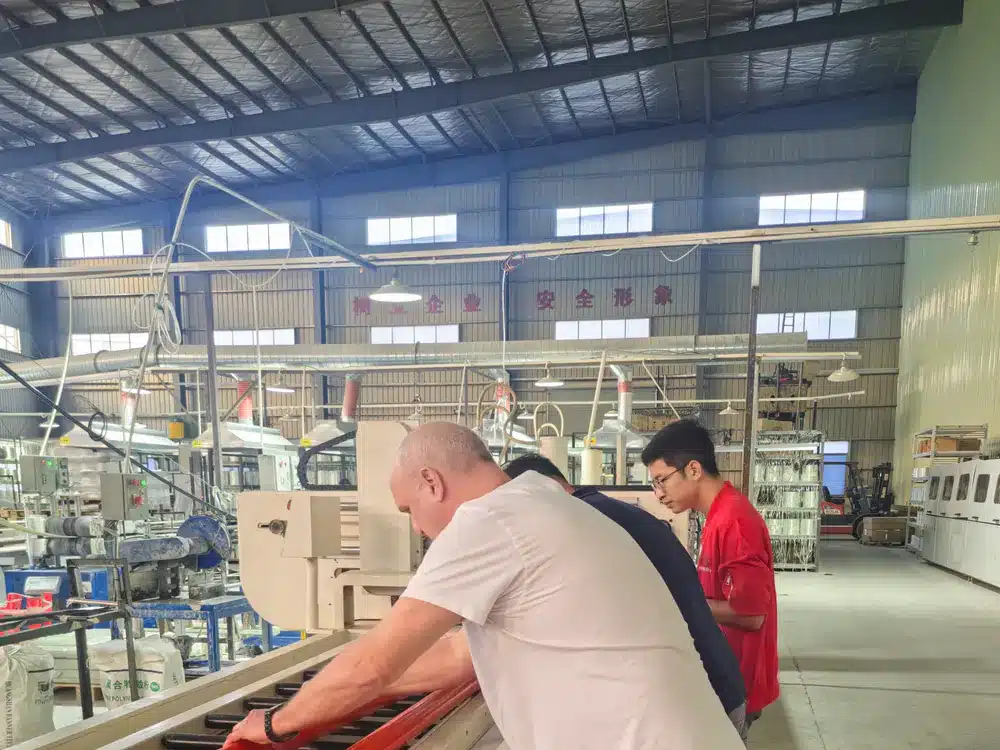
Haikuo team and visiting customer reviewing drawings and product requirements
Haikuo · customer drawing review
Visiting customer and Haikuo team inspecting FRP profiles on the factory floor
Haikuo · profile inspection
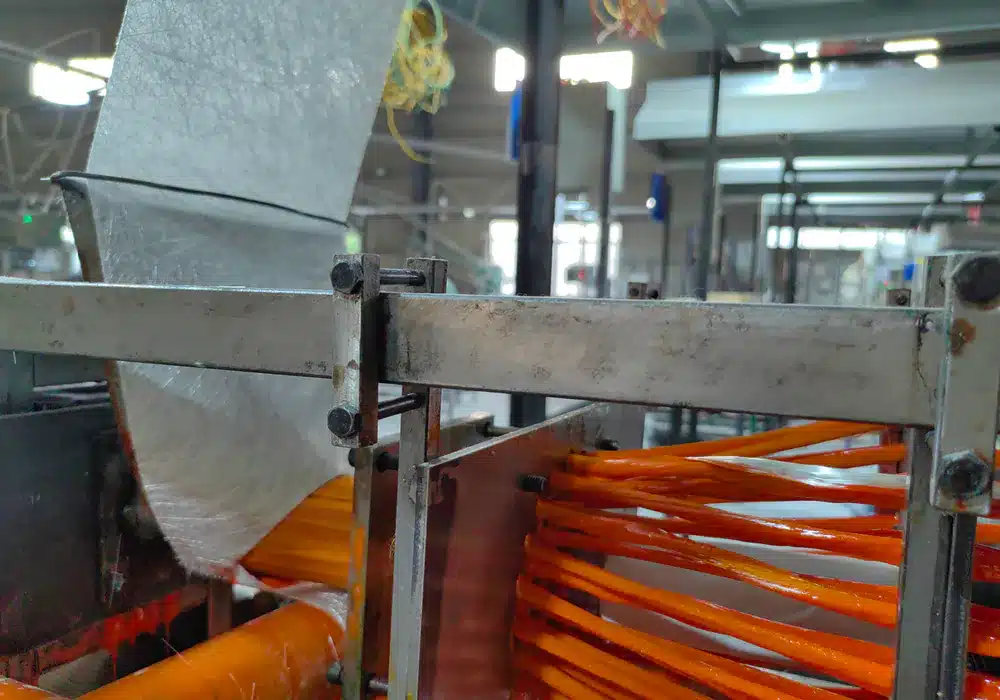
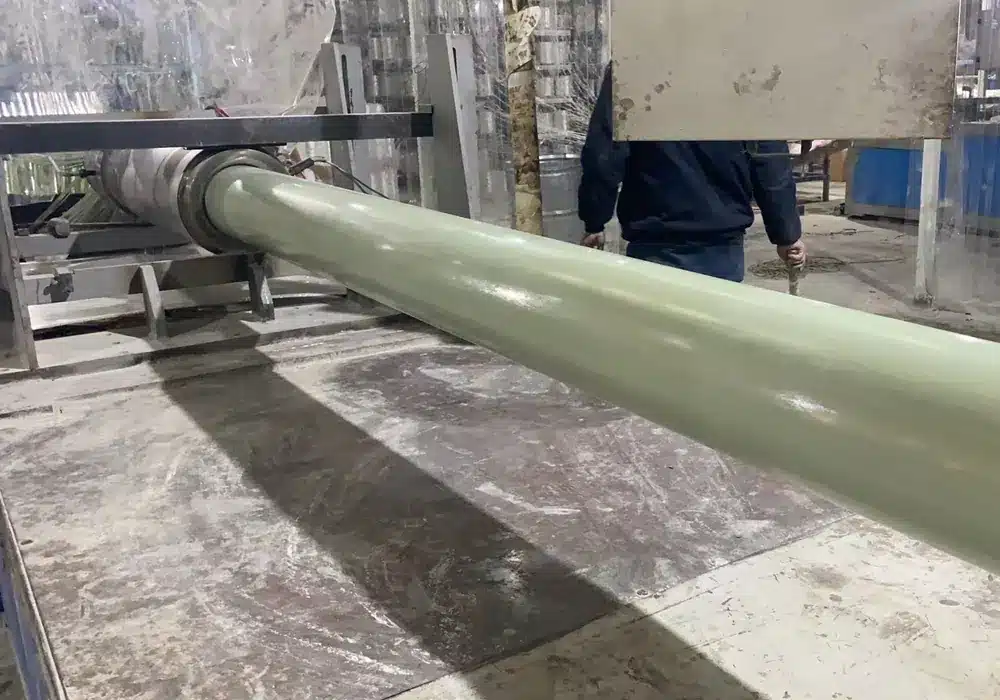
FRP profile forming at the Haikuo factory
Haikuo · profile forming
FRP profile processing at the Haikuo factory
Haikuo · basic processing
01Drawing & revisionOne approved revision connects profile geometry, cut length, processing and purchasing.Confirm before tooling / production
02Critical dimensionsDefine datums, tolerances and measurement method for dimensions that affect function or assembly.Inspection input
03Material & appearanceRecord the agreed resin/reinforcement requirement, colour, surface and visible acceptance baseline.Specification input
04Secondary processingControl hole, notch, cut-out and end-processing locations against the current drawing.Fabrication input
05Identification & packingDefine part labels, bundle quantities, protection and destination-specific handling before shipment.Delivery input
Profile strategy

Use custom tooling only where it creates real OEM value.

A custom profile may consolidate parts, improve an interface or deliver the required material behavior. A standard profile may reduce development time and tooling risk. Many equipment programs use both.

Custom pultruded profile

One controlled section built around the assembly.

The profile can be reviewed around geometry, material system, finish and processing—but feasibility, tooling, test requirements and customer approval must be defined before production.
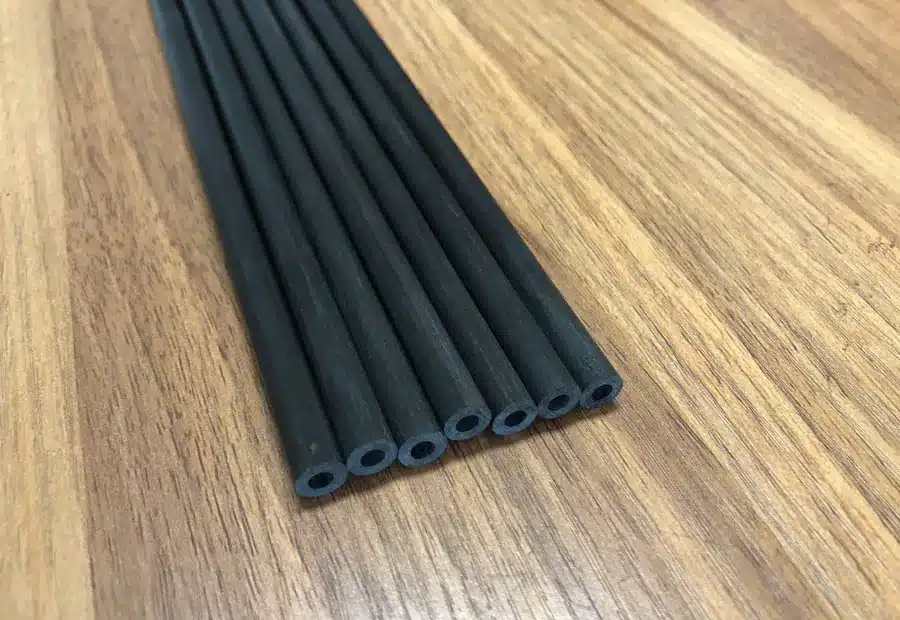
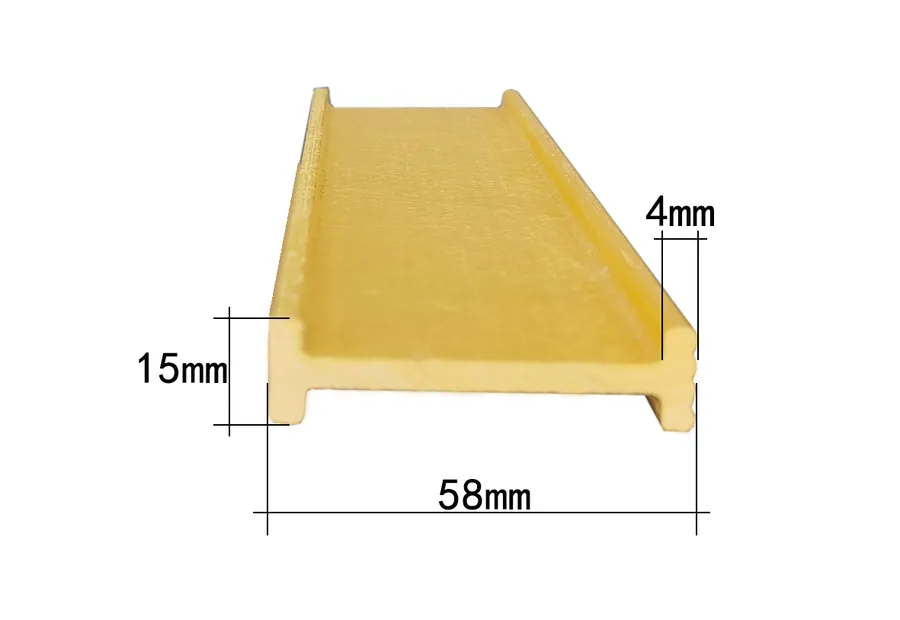
Section geometryConstant cross-section, cavities, lips, ribs and integrated functional features.
Composite designResin and reinforcement concept reviewed against the stated performance and environment.
Finish & colourSurface veil, visible finish, colour target and acceptance conditions.
Processing scopeCut length, holes, notches and other agreed secondary operations.
Choose standard whenExisting geometry meets the function and the program values speed over profile integration.
Choose custom whenThe section solves a recurring interface, performance or assembly problem that justifies tooling.
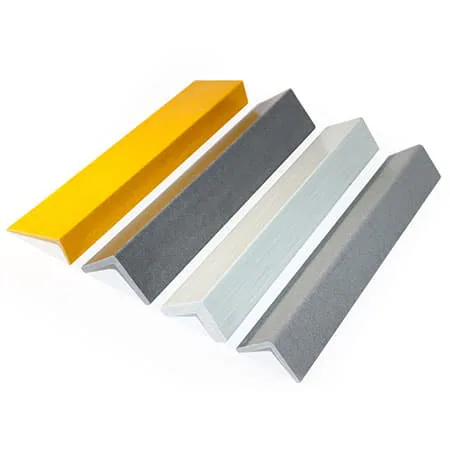
Use a hybrid whenCustom functional parts connect with standard tubes, channels or angles in one equipment family.
Approval baseline

Protect repeat orders with four controlled references.

A first article can look successful while the future supply baseline remains ambiguous. These four records should agree before the program moves into repeat purchasing.

01Approved drawingRevision, dimensions, tolerances, material/finish notes, cut length and processing callouts.
02Accepted sample statusWhich sample or sample report represents approval, plus deviations or corrective changes.
03Inspection baselineCritical characteristics, measurement method, sampling expectation and requested records.
04Order & packing baselinePart numbers, quantities, labels, bundle plan, protection, destination and approved commercial scope.
OEM buyer FAQ
Can Haikuo review a drawing that is not ready for tooling?

Yes. A concept drawing, marked-up section, assembly image or existing sample can start a manufacturing-feasibility discussion. Tooling and production require a controlled final specification.

Does every OEM project need a custom die?

No. A standard tube, channel, angle or other existing profile may be the lower-risk choice. Custom tooling is most useful when the constant cross-section creates repeatable functional or assembly value.

What happens during the 48-hour drawing review?

Haikuo can screen the section, interfaces, stated material and performance requirements, likely tooling route, processing needs and missing information. It is not a substitute for the OEM’s final design validation.

Can a sample or small trial order be discussed before repeat supply?

Yes. The required sample, trial quantity, inspection and approval route should be defined with the drawing, tooling and commercial scope. Availability and cost are confirmed per project.

How should repeat-order consistency be controlled?

Use the approved drawing revision, material/appearance baseline, critical inspection characteristics, processing details, part identification and packing requirements on each purchase order.

What should be sent for the fastest useful quotation?

Send the drawing or sample photos, assembly/application description, critical dimensions and tolerances, environment, processing, sample/trial need, expected quantity and destination.

OEM equipment inquiry

Send the drawing, application and trial-order plan.

Haikuo will review the manufacturing path, identify missing project inputs and prepare the relevant quotation response. Standard quotes target 24 hours; custom drawing feasibility review targets 48 hours.

WhatsApp +86 189 5198 8522 · www.frpgdhk.com